
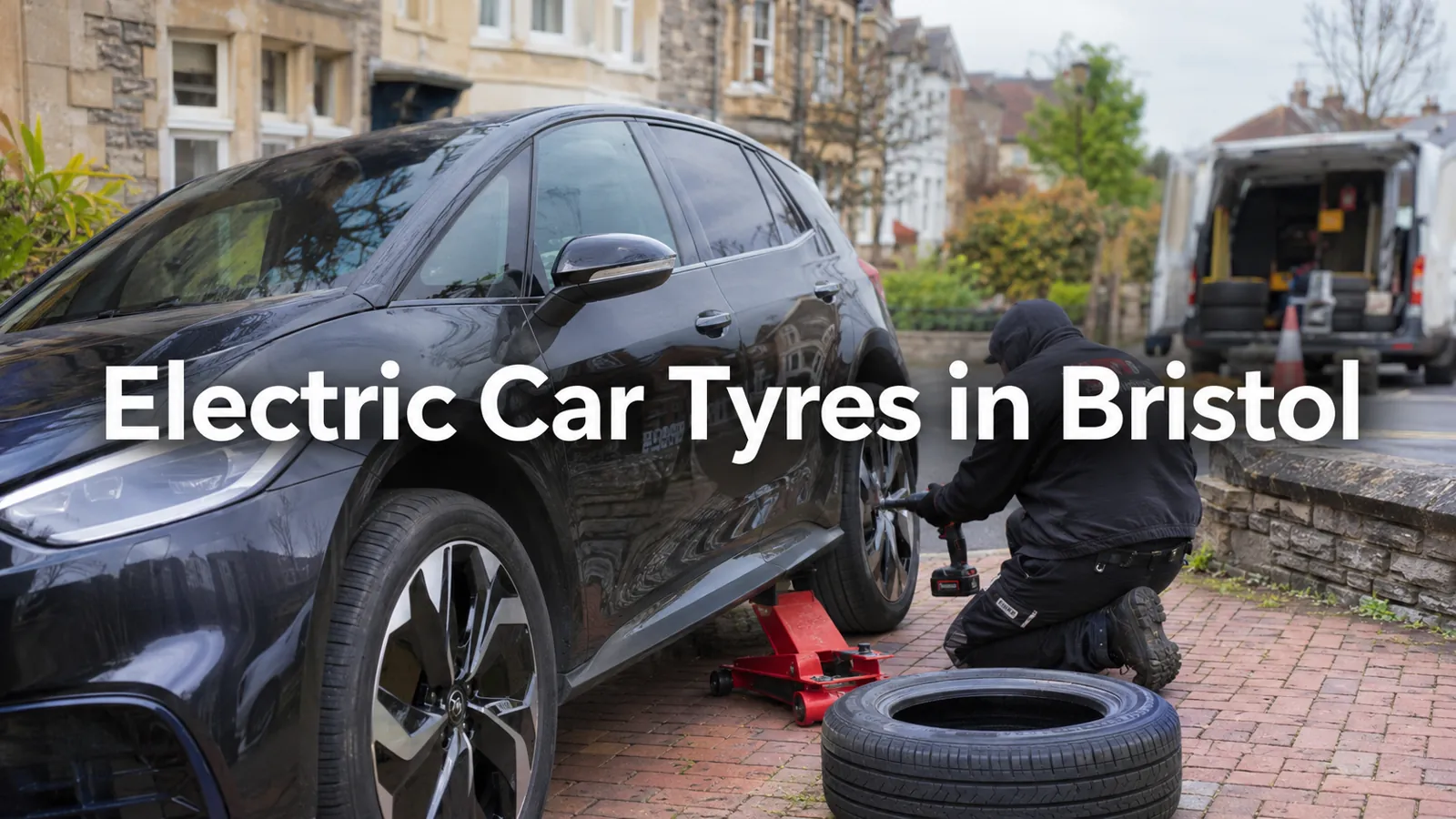
If you have recently bought an electric car in Bristol, or you are about to replace a worn set, you may have been told you need "EV tyres". The phrase can sound as if ordinary tyres are automatically the wrong choice. That is not quite how UK rules work, but the tyre still has to match the car. Many electric models are specified with a higher load rating, a stronger construction, and a compound chosen with range and a quieter cabin in mind.
This guide gives a straight answer for Bristol and South West drivers: whether special EV tyres are required, what load index and HL markings mean, how range, wear and noise are affected, and how mobile fitting at home or work can be arranged.
Short answer: do you need special tyres for an electric car?
No — not as a legal must. Pirelli's UK advice is clear on the legal point: there is no legal requirement to fit a tyre labelled specifically for electric cars, provided the tyres are roadworthy. What you do need is a tyre that matches the vehicle's specified size, load index and speed rating, and that is in a legal condition.
That is not the same as saying any tyre of the same size will do. TyreSafe recommends like-for-like replacement of EV tyres, both for safety and so the tyre's performance still suits the car. Many electric cars were designed around a reinforced tyre that can carry extra weight, cope with instant torque, and keep rolling resistance and noise in check. A replacement that drops below the original load or speed rating can wear more quickly and feel less efficient or noisier.
Start with the original specification on the sidewall and in the handbook. The label on a product page matters less than the markings on the tyre itself.
Why EV tyres are often specified
TyreSafe's main reason is weight. Battery packs are heavy, and that extra mass is carried by the tyres. A tyre that was never designed for that loading can wear earlier than you expect, particularly on the shoulders if it is also underinflated and the sidewall starts to bulge. EV tyres are therefore often built to carry higher loadings, with a reinforced construction, and they may carry HL (high load) markings.
An electric motor also delivers its maximum torque from a standstill. That is one reason EVs feel so quick in everyday traffic, and it puts more demand on the tread as you pull away from lights or join a faster road.
Rolling resistance is the third point, and it is worth understanding without a made-up percentage. As a tyre rolls, it flexes, and energy is lost in that flexing. On an EV that energy comes from the battery, so a tyre with unnecessarily high rolling resistance can mean more charge is used to hold a steady speed. TyreSafe notes that a non-equivalent tyre with high rolling resistance will probably mean more breaks for recharging. The difference in your own car depends on the tyre, the pressures, your routes and how you drive.
Cabin noise is the last everyday difference. With no engine note to mask it, road roar becomes more obvious, especially on coarser surfaces and at dual-carriageway speeds. EV tyres can include features intended to keep that noise down. A quieter tyre is not a legal requirement, but it is often why the original-equipment tyre feels calmer than a basic substitute of the same size.
None of this means every electric car in Bristol must wear a tyre with "EV" printed in the name. It does mean weight, torque, energy use and noise should be part of the choice.
Load index, speed rating and HL markings
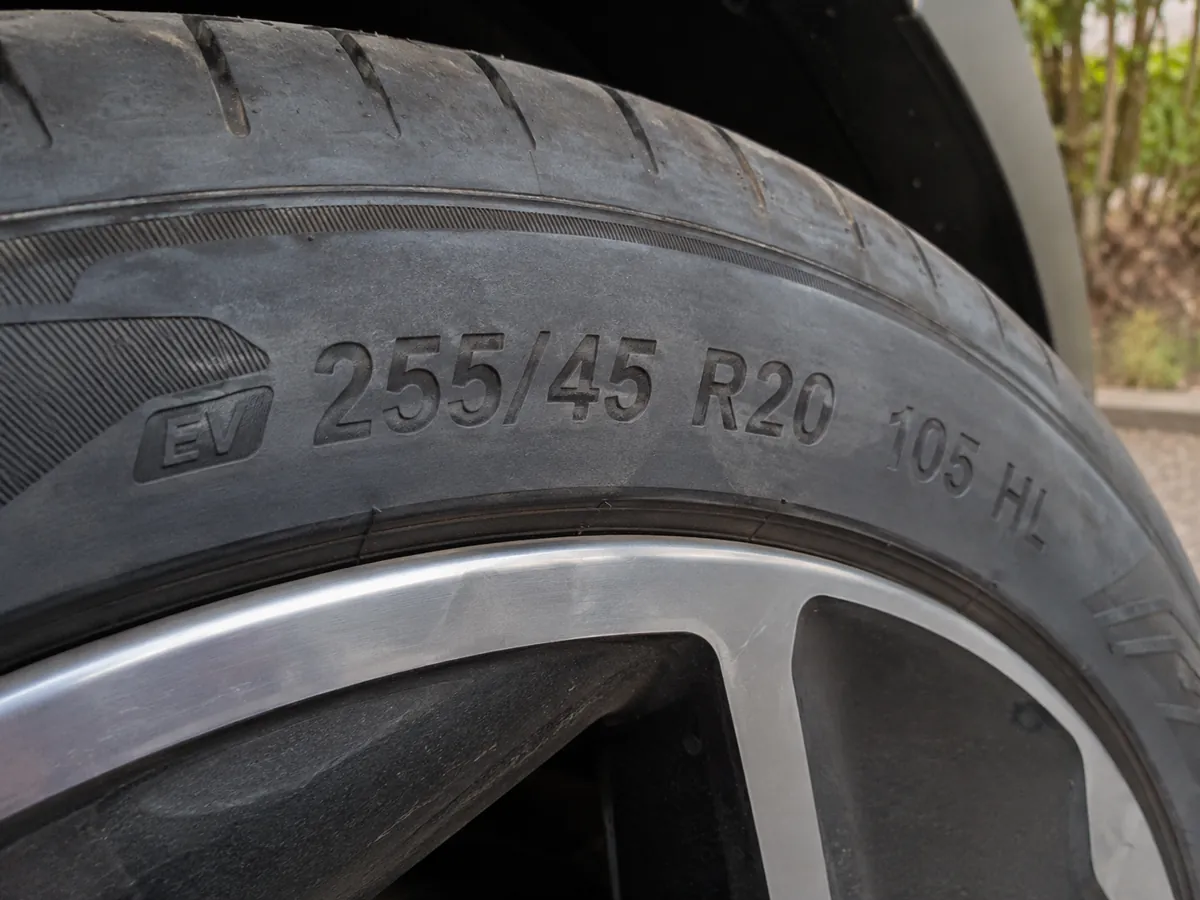
When you replace tyres, it is tempting to look only at the size — 225/45 R18, for example — and stop there. On an EV, TyreSafe says you need to look further than size, starting with the load index and the speed rating.
The load index is the two- or three-digit number after the size, such as 95 or 108 in TyreSafe's examples. The higher the number, the more weight the tyre is designed to carry. The speed rating is the letter that follows, such as Y: the maximum speed at which the tyre is designed to perform when supporting its permitted load. Both must at least match the vehicle's specification. Fitting a lower load index than the car requires is not a harmless shortcut.
Some tyres designed for heavier EVs also carry an HL, or high load, marking. TyreSafe notes that EV tyres are constructed for higher loadings, are reinforced, and may carry HL markings. If your current tyres show HL, treat that as part of the specification to match, and ask the fitter to confirm before anything is ordered.
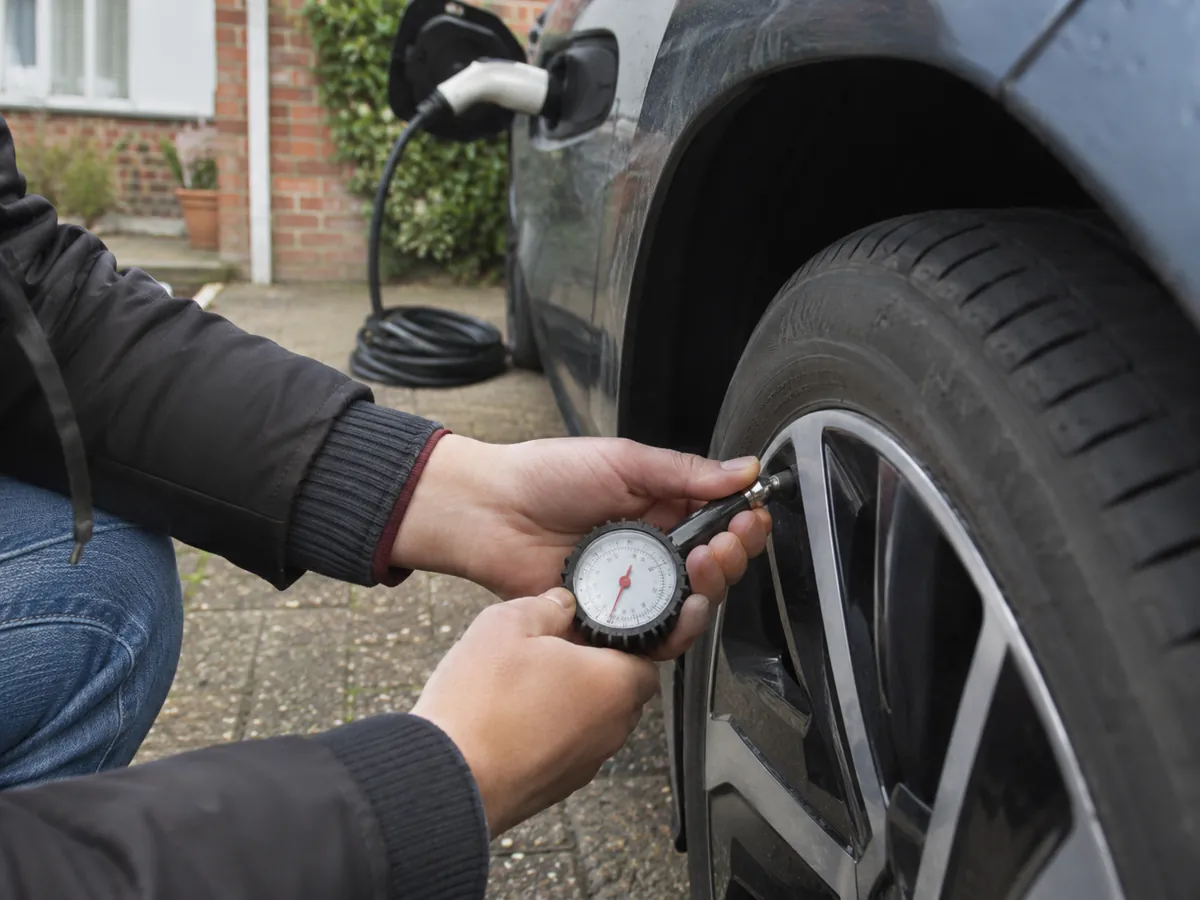
Pressures matter as much as the markings. TyreSafe explains that a tyre works best when the tread is at its proper shape, which depends on the right pressure for the weight being carried. Too little air, or too much weight for the tyre, and the sidewall can bulge, the shoulder can wear more quickly, and rolling resistance can suffer. Follow the pressures in the vehicle handbook or on the door-pillar plaque.
For a plain-English walk-through of size codes, dates and the other stamps on the sidewall, see our guide to how to read your tyre sidewall markings.
Can you fit a non-EV tyre to an electric car?
Sometimes, yes — but only if the replacement meets the size, load index and speed rating specified for the car, and is roadworthy. Same size alone is not enough. A tyre that looks identical from a few feet away can still have a lower load index, a different speed rating, or a construction that was never intended for a heavier, quieter, high-torque vehicle.
TyreSafe's advice is still like-for-like replacement. A tyre that is only "technically acceptable" on paper can wear more quickly, sound louder, and, if rolling resistance is higher, mean you charge a little more often. Those are real trade-offs, but they are not a single published percentage, and this guide will not invent one.
If your car is a plug-in hybrid, the same logic applies: match the original size, load and speed rating, and be cautious about stepping down from a reinforced or EV-oriented specification just because the car also has an engine.
Electric SUVs and 4x4-style EVs are often heavier still and may use a different size or load rating. The principle does not change, but the sidewall and handbook still need a careful check. For fitting on larger vehicles, see SUV tyre fitting in Bristol. For a broader look at types, load and speed ratings, use the complete guide to choosing the right tyres for your car.
Range, wear and noise in everyday Bristol driving
Most EV miles around here are a mix of city streets, short hops to work, and the occasional longer run on the M5, M4 or A370. Two things show up quickly: how evenly the tyres are wearing, and how much road noise you hear once the cabin is otherwise quiet.
Low rolling resistance helps the car use less energy at a steady speed, which is useful on those longer stretches. It is not a magic range booster, and it should never come at the expense of a tyre that cannot carry the car or grip properly in the wet. TyreSafe is careful on this point: there is a balance to strike, because grip still matters when you need to slow down. Keep the tyres correctly specified and at the handbook pressure, and avoid reading too much into a neighbour's range figures.
Wear is often where a poor match shows itself first. Extra weight and instant torque can polish the tread more quickly if the tyre is under-specified or underinflated. Pay attention to shoulder wear, and do not stretch a tyre that is getting close to the legal limit. We have written separately about the dangers of worn tyres.
If cabin noise bothers you, that is a fair reason to look at an EV-oriented or quieter design rather than a basic same-size option. Our explainer on what silent tyres are covers how some tyres are designed to reduce that roar. It is a comfort choice, not a legal one.
An EV still needs a tyre that works in the cold and in standing water, just like any other car in Bristol. If you are considering a winter or all-season set, that decision is covered in our winter tyres in Bristol guide. Whatever you choose, the load index and speed rating still have to match the car.
How to choose a replacement set
The simplest rule is also the one TyreSafe puts first: replace like-for-like with the original specification. Read the full size, load index, speed rating and any HL marking from the tyres on the car, then cross-check the handbook or the sticker in the door shut. If the current tyres were not the original specification, do not copy a downgrade. Go back to what the vehicle was designed to use.
From there, you can compare options that meet or exceed that specification — including tyres marketed for electric cars, and other tyres that carry the right load and speed ratings. Ask about construction, rolling resistance and noise if those matter to you, but do not trade away the load index to save a little on the bill.
Rapid Mobile Tyres fits new tyres only. We do not sell or fit part-worn tyres. When you request a quote, a photo of the sidewall, or the vehicle registration plus the full size written down, is the cleanest way to avoid ordering the wrong tyre.
Mobile EV tyre fitting in Bristol
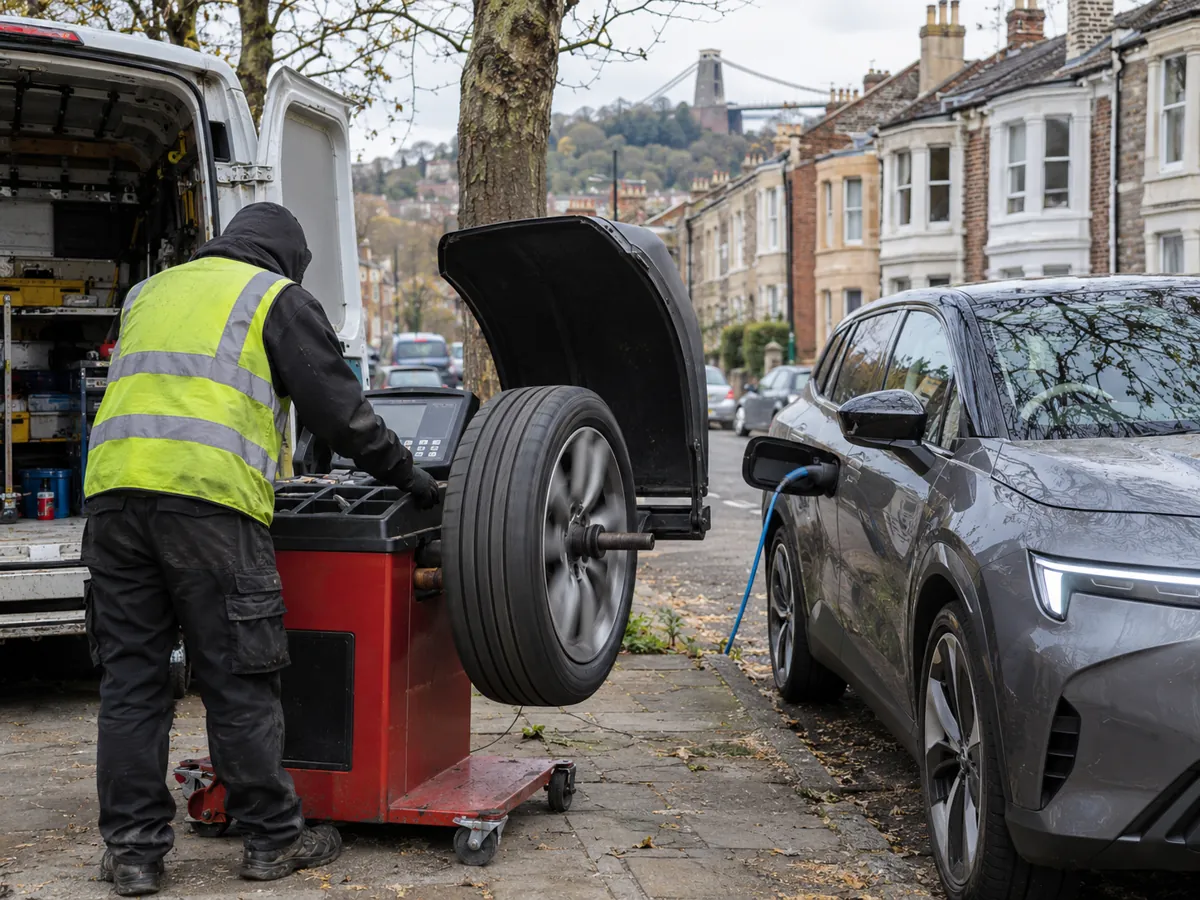
You do not have to take an electric car to a dealer or a garage forecourt to have tyres changed. Mobile tyre fitting means the work can be done on your driveway, in a workplace car park, or at another safe, legal place we can reach. For local cover, see mobile car tyre fitting in Bristol.
If you are replacing a set, it is usually better to change all four together, so the size, load rating and tread pattern stay matched and the car keeps its balance. A single replacement can be the right call after a puncture, provided the new tyre still matches the specification and the others are in sound condition. Rapid Mobile Tyres can confirm that when we see the tyres.
We cover Bristol and surrounding South West areas, including Bath, Weston-super-Mare, Chepstow, Newport, Gloucestershire and the other towns listed on our areas we cover page. Electric SUVs can be fitted on the same mobile basis; details are on the SUV tyre fitting page.
Frequently asked questions
Do electric cars legally need special tyres in the UK?
No. There is no UK legal requirement to fit a tyre marketed specifically for electric vehicles, provided the tyres are roadworthy (Pirelli UK). You still need the right size, load index and speed rating, and TyreSafe recommends like-for-like replacement.
Can I put ordinary tyres on my EV if the size is the same?
Only if they also meet the specified load index and speed rating, and are in a legal condition. Matching the size is not enough. A lower-rated tyre can wear more quickly and change energy use and road noise.
What does the load index (and HL) mean on an EV tyre?
It is a two- or three-digit number showing how much weight the tyre is designed to carry — TyreSafe gives examples such as 95 or 108. The speed rating is the letter that follows. HL means high load, and should be matched if it is part of your current specification.
Will the wrong tyres reduce my electric car's range?
They can, particularly if rolling resistance is higher than on the original tyre, or if the tyres are underinflated. TyreSafe notes that a non-equivalent tyre with high rolling resistance will probably mean more recharging stops. There is no single percentage that applies to every car.
Do I need winter tyres on an EV in Bristol?
Not as a legal requirement, and not automatically because the car is electric. It depends on your routes and how often you face cold or icy roads. See our winter tyres in Bristol guide. Any seasonal tyre still has to meet the EV's load and speed specification.
Should I replace all four tyres at once?
When you are changing a set, yes — all four should match. A single tyre after a puncture can be acceptable if it matches the others and they still have plenty of life.
Can Rapid Mobile Tyres fit EV tyres at home or work in Bristol?
Yes. Rapid Mobile Tyres offers 24/7 mobile fitting of new tyres, including correctly specified tyres for electric cars, at home or at work in Bristol and the surrounding areas we cover. Call 07494 247246, or use the contact page, to check availability and book.