
What Are Silent Tyres? A Plain-English UK Guide
How foam-lined tyres cut cabin noise, who they suit, what they cost, and how punctures get repaired.
Home / Blog / What Are Silent Tyres?
You fit new tyres, yet the motorway drone stays. In a quiet car, that constant hum is hard to ignore. It also makes calls and conversations harder.
So, what are silent tyres? This guide explains how foam-lined tyres work, how much quieter they really are, and what to ask before you buy or repair a set.

What Are Silent Tyres?
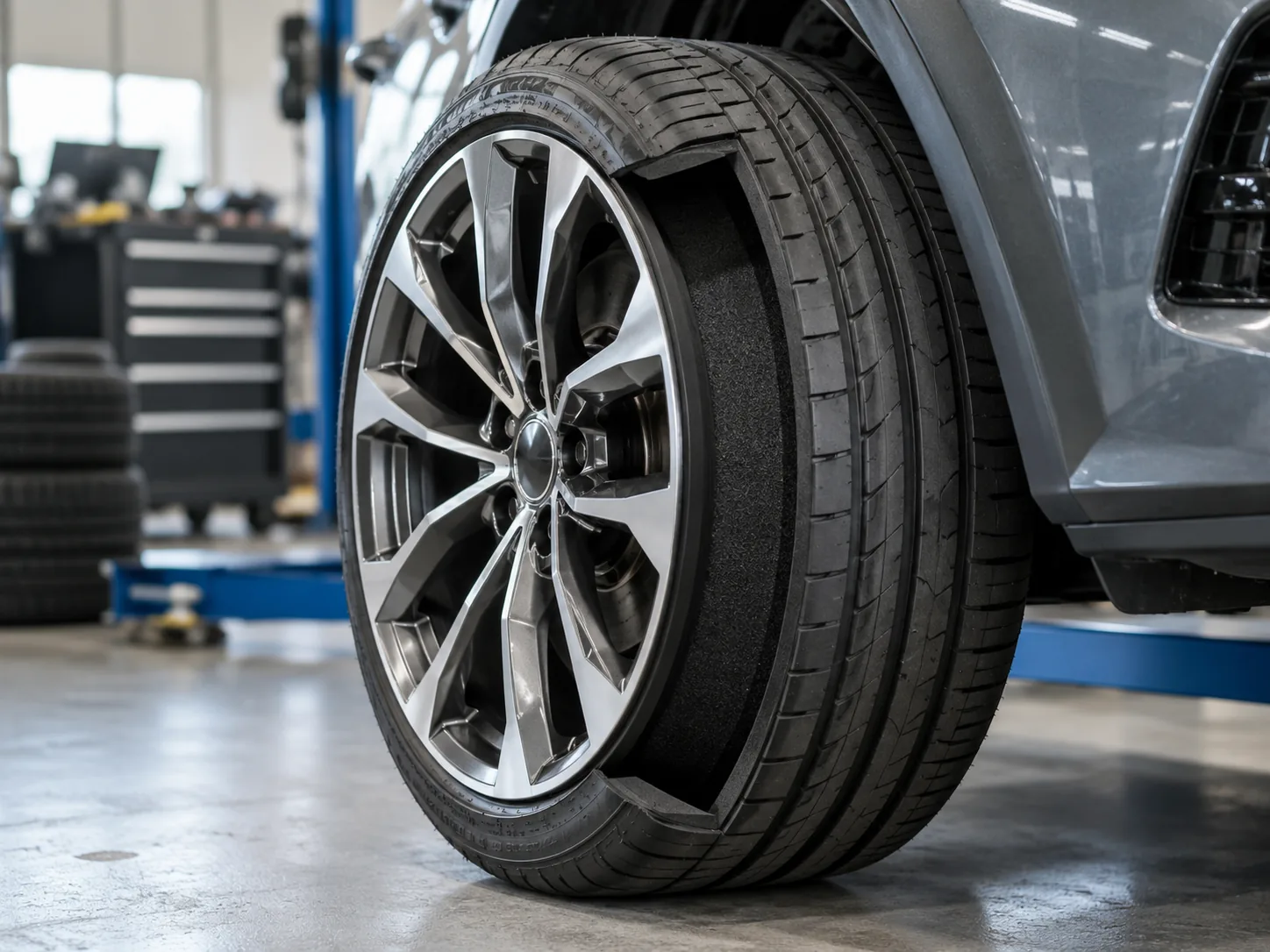
Silent tyres are tyres with a ring of polyurethane foam bonded inside the tread, which absorbs noise from the air inside the tyre.
Brands also call them noise-cancelling tyres, noiseless tyres or quiet tyres. Each maker uses its own name, such as ContiSilent, Michelin Acoustic Technology or Pirelli Noise Cancelling System.
You cannot see the foam from outside, because it sits on the inner surface of the tyre. Many of these tyres also use tuned tread patterns and rubber compounds to cut noise further.
How Do Silent Tyres Work?
Silent tyres work by using foam to absorb vibrating air inside the tyre before that vibration reaches the wheel and the cabin.
As a tyre rolls, the air in its cavity resonates. Goodyear says that vibration passes into the vehicle's structure, and Michelin compares the cavity to a drum.
The foam soaks up that resonance. Continental says it stops vibration travelling from the tyre through the wheel and axle into the cabin.
Continental also says ContiSilent fits all commonly available rims and mounts like any standard tyre. Mobile tyre fitting therefore follows the usual steps for those tyres.
Tread design adds to tyre noise reduction. Michelin varies the width of its tread blocks so no single repeating frequency builds up and creates noise.
Which Noise Do Silent Tyres Actually Fix?
Silent tyres mainly fix cavity drone, the low hum from the air inside the tyre, not every sound a tyre makes.
Road surface, tread pattern and tyre width still shape what you hear. Foam cannot change the road under your wheels.
A February 2022 trade test in Tire Technology International shows the limit. On a luxury saloon, foam cut the main cavity tone by nearly 10 dBA on polished asphalt. Overall cabin noise fell only from 66.5 to 64.8 dBA.
On new asphalt, the cabin level with foam rose to 70.5 dBA. One test on one car cannot speak for every vehicle, but it shows the road surface still matters.
The tyre label cannot show any of this. Michelin states that the decibel value on the label measures exterior noise, not cabin noise.
That means the label alone cannot tell you whether a tyre has foam. Ask for the technology by name instead.
Which Brands Make Noise-Cancelling Tyres, and How Do You Spot Them?
Continental, Michelin, Pirelli, Goodyear, Dunlop, Hankook, Bridgestone and Kumho all sell foam-lined tyres, each under its own name.
| Brand | Name or tag to look for in UK listings |
|---|---|
| Continental | ContiSilent |
| Michelin | Acoustic |
| Pirelli | NCS (Pirelli Noise Cancelling System) |
| Goodyear | SoundComfort, often shown as SCT |
| Dunlop | NST |
| Hankook | Sound Absorber |
| Bridgestone | B-Silent |
| Kumho | K-Silent |
Names in listings are the quickest check. Compare the full model name against this table before you order.
Michelin says it designs its Acoustic tyres exclusively as original equipment, developed with vehicle makers. It does not say whether replacement tyres carry the same foam, so ask your dealer to confirm.
Pirelli's 2019 press release advises buying tyres with PNCS markings made for your car to keep the benefit.
Silent tyres come in SUV sizes too. UK listings include the Michelin Primacy 4 SUV Acoustic and the Continental SportContact 5 SUV ContiSilent. Check the exact size with whoever handles your SUV tyre fitting.
How Much Quieter Are Silent Tyres?
Brands claim anything from 2 dB to 9 dB(A), or 20% to 60%, but each figure comes from a different test.
| Brand | Claim | Test basis stated |
|---|---|---|
| Continental | Up to 9 dB(A) less of the rolling noise heard as annoying inside the car | Varies with vehicle, speed and road surface; no test detail |
| Goodyear | Up to 50%, or up to 60% (4 dBA), less interior noise | Internal road tests, 2011 to 2021, in Luxembourg on VW, Audi and Ford models |
| Michelin | About 20% less perceived cabin noise | Measured in 2020 on a 245/45 R19 tyre fitted to a KIA Cadenza, 170 to 230 Hz range |
| Pirelli | 2 to 3 dB, described as half the perceived noise; up to 25% in a 2019 press release | No test method given for either figure |
Percentages and decibels do not convert neatly. Continental's guide says the ear hears every 10 dB drop as half the sound.
On that rule of thumb, a 2 to 3 dB cut falls well short of half. That is why every claim needs its test conditions beside it.
Treat each figure as a best case on one car. Continental and Goodyear both say your result depends on the vehicle, its speed and the road.
Are Silent Tyres Worth the Extra Cost?
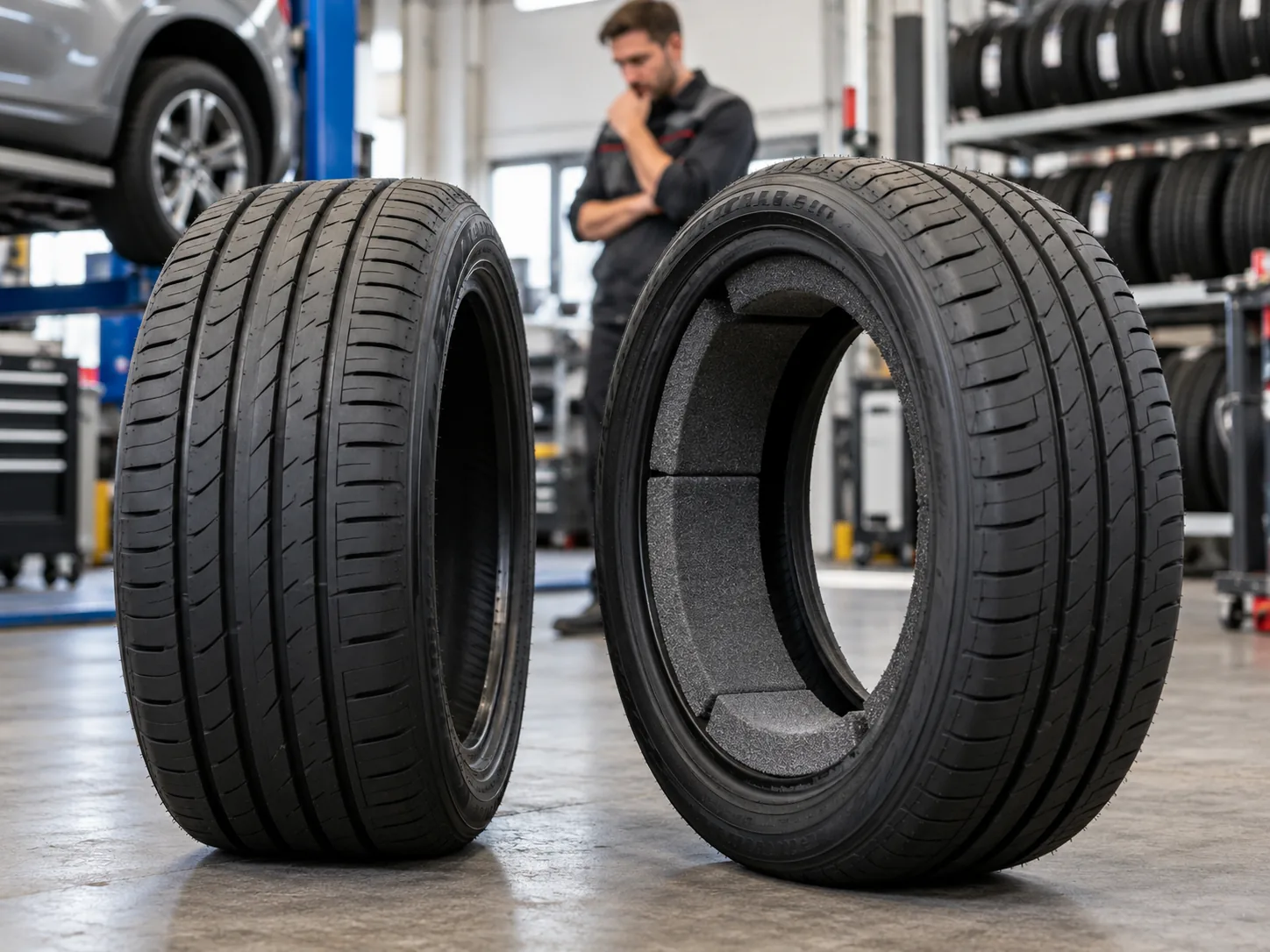
Silent tyres suit drivers who cover motorway miles or drive electric, but they usually cost more and come in fewer options.
- Cost: Kwik Fit puts them at upwards of 15% more than standard tyres (May 2025).
- Choice: Kwik Fit notes they may not suit every car or come in a wide range of options.
- Electric cars: Kwik Fit says the need for quieter tyres has grown with EVs, because tyre noise stands out without an engine roar. That makes silent tyres for EVs a natural fit.
- Comfort: Michelin says the foam makes hands-free calls clearer and eases driver fatigue on long journeys.
- Performance: Continental says ContiSilent does not change braking, handling, mileage, load or speed capability.
Where both versions exist, ask for a quote on each. Then compare the two prices, whether you buy at a garage or book tyre replacement at home.
Can You Repair a Silent Tyre After a Puncture?
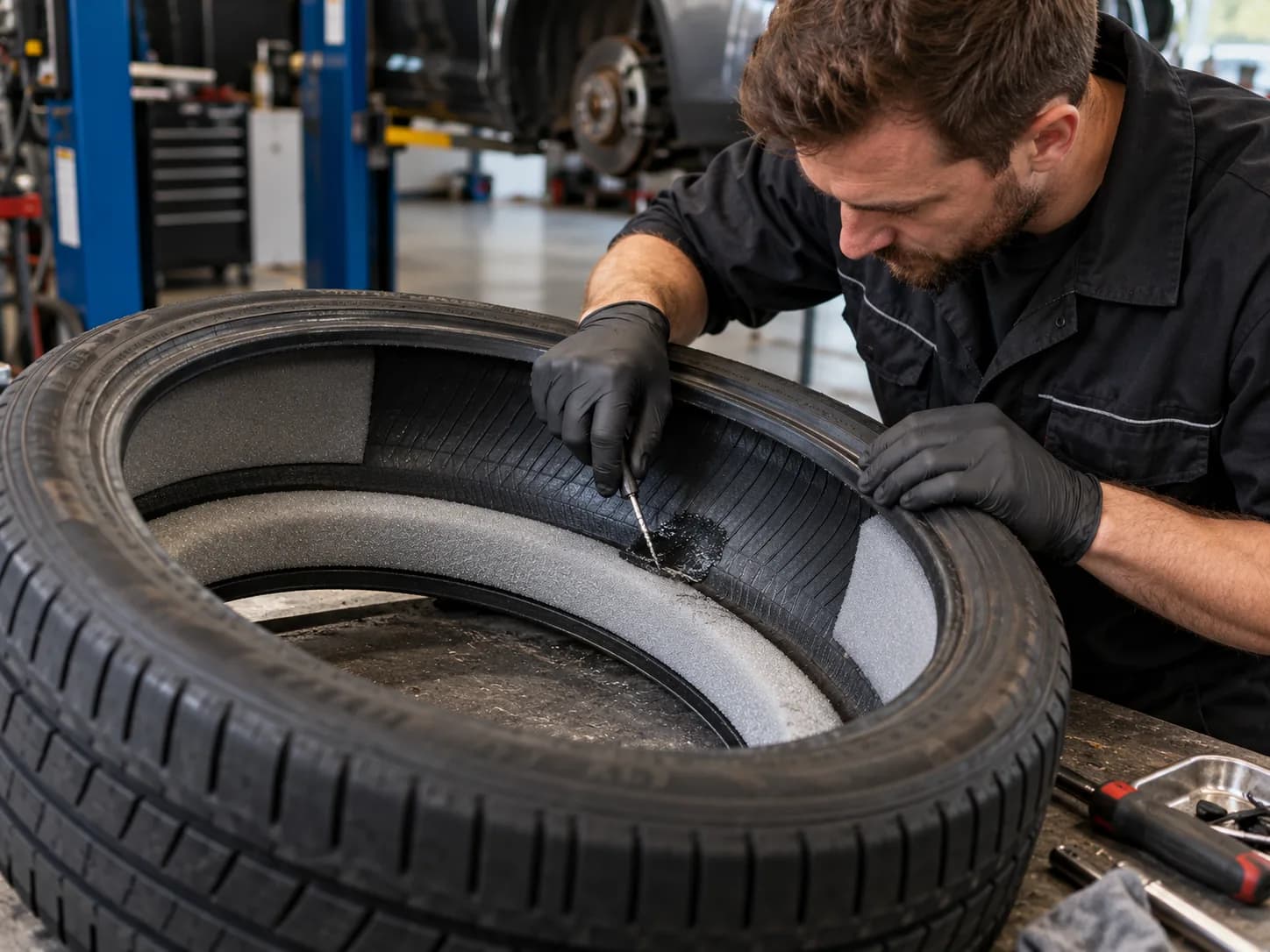
Often yes, but the foam adds extra steps to the repair.
Goodyear states that SoundComfort tyres are repairable. Michelin's and Pirelli's technology pages give no repair guidance.
The usual limits still apply. UK retailers say you can repair only punctures in the central three-quarters of the tread, under 6mm across, and V-rated or faster tyres take one repair.
A February 2022 trade article adds that foam scuffs if you drive on a deflated tyre. It says crumbs can then block the valve.
A December 2021 thread on a Tesla owners' forum reports that some shops refuse foam-lined tyres, while others cut out a small foam section around the puncture. That is one forum's report, so ask your fitter before you need one.
Avoid canned sealant unless the tyre maker approves it. Slime, as quoted by The Autopian, says foam absorbs the sealant before it reaches the puncture, and the tyre may need replacing.
Some foam tyres carry a factory sealant layer instead, such as ContiSeal ContiSilent, Goodyear SealTech and Pirelli Seal Inside models in UK listings. That differs from a can of sealant in the boot.
Run-flat tyres are a separate case. UK retailers say you cannot repair a punctured run-flat.
Tell the fitter your tyre has foam before the wheel comes off. If the tyre is beyond repair, emergency mobile tyre fitting can bring a replacement to you.
How to Choose Silent Tyres: A Six-Point Checklist
Choose silent tyres by checking six things, whether you use a garage or mobile car tyre fitting.
1. Name the technology
Ask for the exact model and its foam name, such as ContiSilent or Acoustic.
2. Check the size
Foam models do not cover every size, and Michelin Acoustic tyres start as original equipment.
3. Read the label for outside noise only
UK retailers treat a figure in the high 60s dB as quiet, but the label says nothing about the cabin.
4. Ask about repairs
Check whether your fitter repairs foam-lined tyres and what they advise on sealant.
5. Fix the cheap causes first
Check cold pressures against the maker's figure, as the Highway Code advises, and replace tyres below the 1.6mm legal limit.
6. Compare prices
Get quotes for foam-lined and standard versions, then decide whether a quieter cabin justifies the difference.
FAQs About Silent Tyres
Do silent tyres really work?
Yes, they reduce cavity drone, but the gain varies by car and road. Brands claim from 2 dB to 9 dB(A), and a February 2022 trade test measured a 1.7 dBA fall in overall cabin noise on polished asphalt.
Are silent tyres more expensive?
Usually, yes. Kwik Fit puts them at upwards of 15% more than standard tyres (May 2025), so ask for quotes on both versions of your size.
Can silent tyres be repaired?
Often, yes. Goodyear says SoundComfort tyres are repairable, but the standard limits apply and the fitter must inspect inside the tyre. Tell your fitter about the foam first.
Are silent tyres only for electric cars?
No. Kwik Fit says they often appear on electric, luxury and long-distance vehicles, but UK listings include everyday models such as the Continental PremiumContact 6 and Goodyear EfficientGrip Performance 2.
Do silent tyres affect grip or wear?
Continental says ContiSilent does not change braking, handling or mileage. Halfords warns that quiet tyres in general often use softer compounds, which can affect grip and wear, so compare wet-grip and wear data for your model.
Need Tyres Fitted in Bristol?
Rapid Mobile Tyres fits car, SUV and van tyres at your home or workplace across Bristol and the surrounding area, 24 hours a day. Check the areas we cover or browse our services.
For more advice, read the tyre blog.