
How to Choose the Right Tyres for Your Car: A Complete Guide
Size, load index, season, the tyre label and what to tell your mobile fitter.
Home / Blog / How to Choose the Right Tyres for Your Car
You search for new tyres and meet a wall of numbers, letters and brand names. Pick the wrong size or rating and you fit a tyre your car cannot safely use.
This guide shows how to choose the right tyres for your car in a clear order. It covers the sidewall code, the season, the tyre label and what to tell your fitter at Rapid Mobile Tyres.
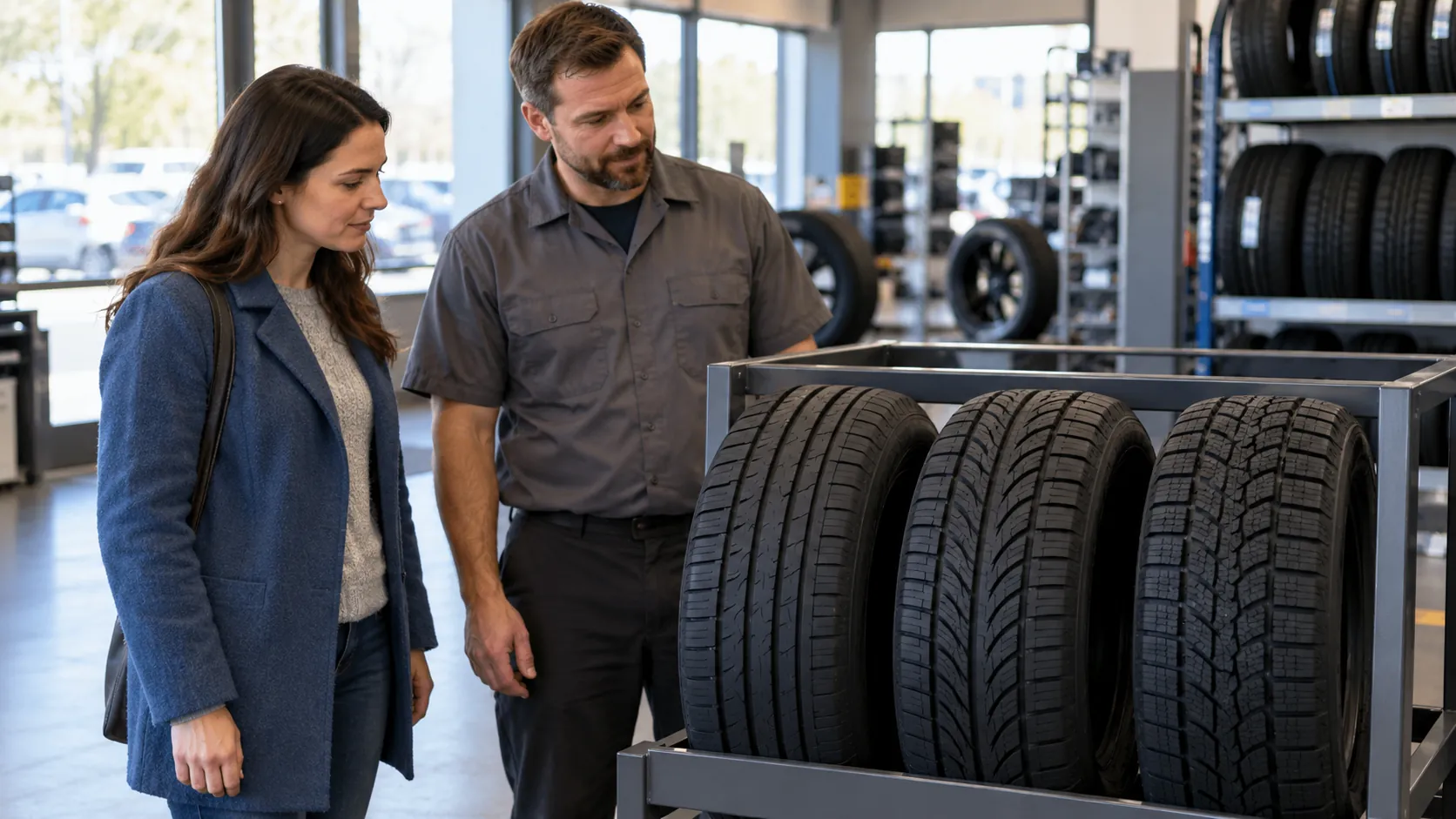
How to Choose the Right Tyres for Your Car in Four Steps
Start with the tyres your car maker approves, then pick a season, check the tyre label and compare brand ranges.
| Step | What you decide | Where to look |
|---|---|---|
| 1. Size and specification | Size, load index, speed rating | Door sticker, handbook, sidewall |
| 2. Season | Summer, all-season or winter | Your weather and the 3PMSF symbol |
| 3. Label grades | Wet grip, fuel efficiency, noise | The tyre label |
| 4. Brand range | Which maker and which range | Independent tests and your fitter |
Your car fixes step 1. Steps 2 to 4 are your choices.
Rapid Mobile Tyres fits the tyres you choose at your home, workplace or roadside, 24 hours a day, 7 days a week. Read more about mobile tyre fitting.
How Do You Find Your Tyre Size and Specification?
The size sits on the tyre sidewall, and the approved sizes for your car sit on the driver's door sticker, in the handbook and sometimes inside the fuel filler flap.
Michelin lists those three places in its tyre size guidance (February 2026). Match the new tyre to the approved figures, not to a guess.
| Marking | Example | What it means |
|---|---|---|
| Width | 205 | Tyre width in millimetres |
| Aspect ratio | 55 | Sidewall height as a percentage of the width |
| Construction | R | Radial, the standard for almost all car tyres |
| Rim diameter | 16 | Wheel size in inches |
| Load index | 91 | A code for the most weight one tyre can carry |
| Speed rating | V | A code for the most speed the tyre can sustain |
Pirelli says the sidewall also shows a maximum pressure in psi. That figure is not the pressure your car needs, which sits in the handbook or on the driver's door. Running at the maximum can wear the tyre faster and upset braking and handling.
Look for the E mark too. Pirelli says UK tyres carry an E followed by a country number, E11 for the UK, under the Motor Vehicle Tyres (Safety) Regulations 1994. Raised wear indicators in the grooves show when the tread is too low. The guide to tyre sidewall markings covers every symbol in detail.
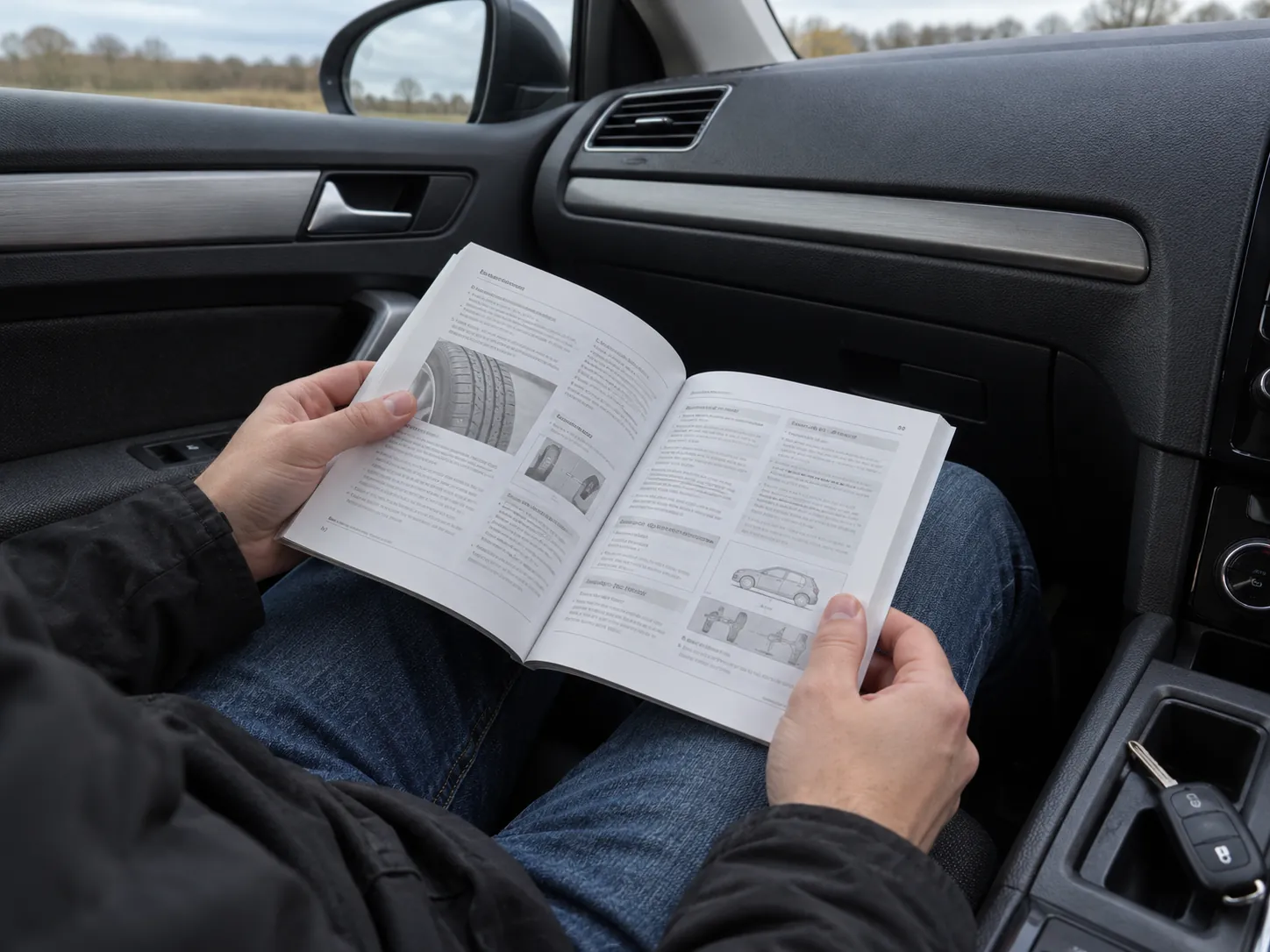
What Do Load Index and Speed Rating Mean?
Load index is a code for the most weight one tyre can carry, and speed rating is a code for the most speed it can sustain. Never fit a lower figure than your car maker lists.
| Load index | Most weight per tyre |
|---|---|
| 91 | 615 kg |
| 94 | 670 kg |
| 97 | 730 kg |
| 98 | 750 kg |
| Speed rating | Most speed |
|---|---|
| T | 118 mph |
| H | 130 mph |
| V | 149 mph |
| W | 168 mph |
| Y | 186 mph |
The rating describes the tyre, not the speed limit. Michelin says summer tyres may carry a higher load index or speed rating than specified, never a lower one.
Higher ratings are not automatically better. Michelin says they can reduce tread life and ride comfort (3 September 2025).
Michelin also says an original-equipment (OE) marking is not required when the size, speed rating and load index match your original tyres.
Can You Fit a Different Tyre Size?
You can fit a different size only if your car maker approves it.
Michelin (February 2026) says to choose from the approved sizes and to resize all four tyres together, not one axle. A wheel diameter change also needs new rims. The speedometer reads wrongly if the overall diameter changes.
Michelin warns that a non-approved size can create safety risks, and that a tyre that is too wide may stick out past the bodywork. Ask your insurer before you change size.
Rapid asks for your tyre size and confirms it on the call, so read it from the sidewall before you ring.
Which Season Is Right: Summer, Winter or All-Season?
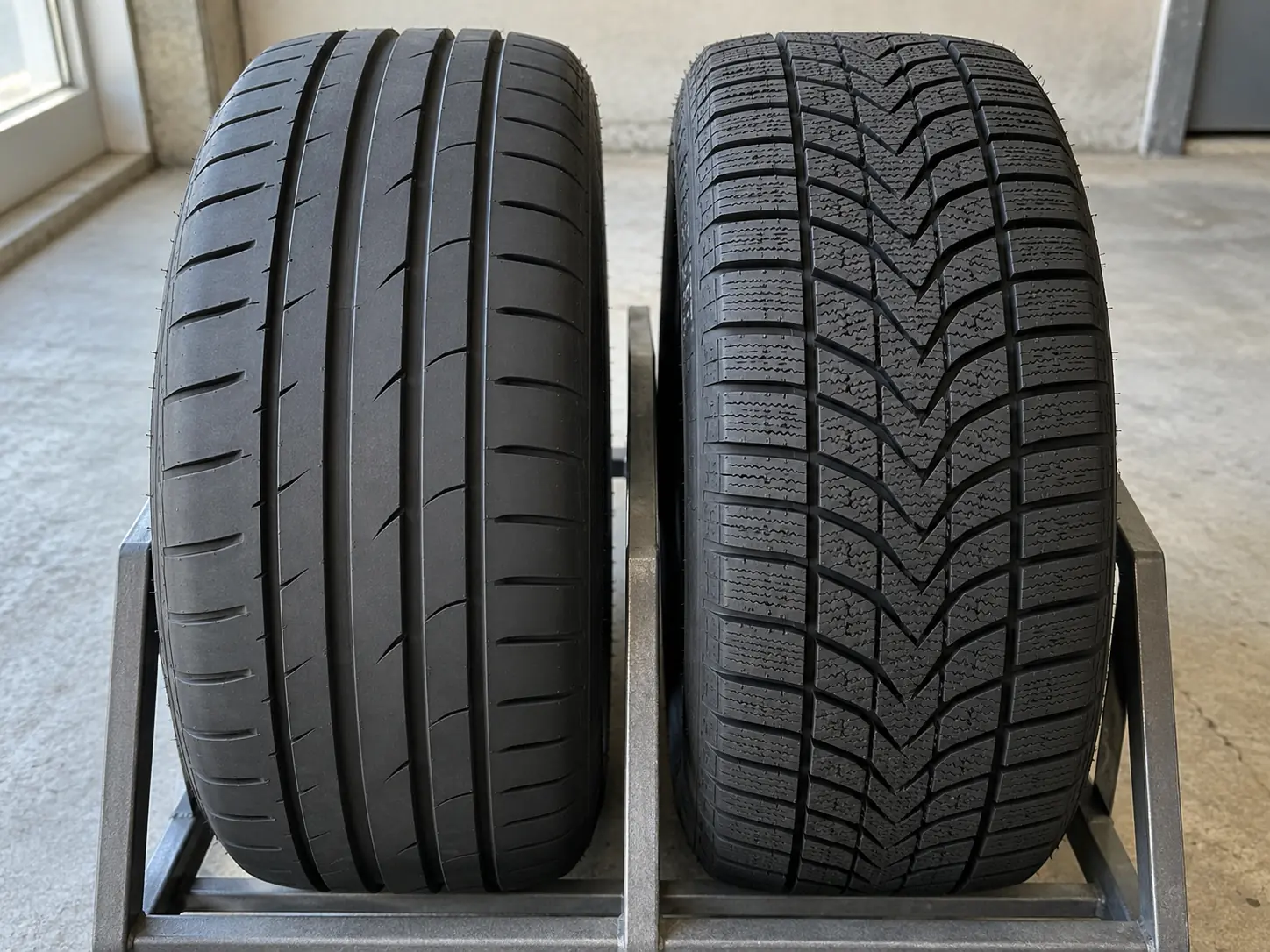
Summer tyres suit mild weather, winter tyres suit cold weather below about 7°C, and all-season tyres sit between them.
| Type | Best for | Trade-off |
|---|---|---|
| Summer | Mild, dry and wet roads | Weaker in cold and snow |
| All-season | Year-round UK driving | A compromise at both extremes |
| Winter | Regular cold, snow or ice | Little gain in mild spells |
The RAC says winter tyres are not mandatory in the UK and perform best below 7°C. It describes all-season tyres as a compromise (2 September 2025).
TyreSafe testing, reported by the RAC, found summer tyres stopped slightly shorter at 20°C. At 5°C, winter tyres stopped about 5 metres shorter.
The two winter symbols mean different things, Michelin says. M+S is a self-declared marking with no certified test, while 3PMSF needs a laboratory test on snow. A 3PMSF tyre also carries M+S.
If you want snow grip from an all-season tyre, look for the 3PMSF symbol on the sidewall. Rapid says it fits winter or all-season tyres if you ask. For more on weather and car design, read how climate change is changing car design.
How Do You Read the Tyre Label?
The tyre label grades fuel efficiency, wet grip and external noise, and it adds a pictogram for snow or ice grip where a tyre qualifies.
| Label item | What it measures |
|---|---|
| Fuel efficiency | Rolling resistance |
| Wet grip | Braking on wet roads |
| External noise | Noise outside the car, in decibels |
| Snow pictogram | Tested grip in severe snow |
| Ice pictogram | Tested grip on ice, car tyres only |
The European Commission says the label has a new design from 1 May 2021. It moved from seven classes to five and removed the two lowest grades from the market (page updated March 2024).
A QR code on the EU label links to the tyre's entry in the EPREL product database, where you can read the label and information sheet. Only car tyres that pass the ISO 19447 test may show the ice pictogram.
Great Britain and Northern Ireland differ. Government guidance (updated 5 October 2023) says Great Britain grades fuel efficiency and wet grip from A to G and shows noise only in decibels. Northern Ireland grades them A to E and grades noise A to C.
Continental says ice-pictogram tyres target very severe climates and may underperform on wet grip, handling and wear in milder conditions.
Michelin warns the label covers only a few criteria and tests new tyres. It cannot show how a tyre performs as it wears.
The label rates noise outside the car. For tyres built to cut noise inside the cabin, read what silent tyres are.
Premium, Mid-Range or Entry-Level: How Do You Compare?
Compare tyre ranges on the six criteria Michelin lists: grip, longevity, energy efficiency, handling, comfort and noise, and durability.
Improving one criterion often weakens another, Michelin says, so choose by how and where you drive. A tier tells you less than a test result for the exact range.
Specialist magazines and professional bodies test tyres every year on different surfaces. They check braking, handling, rolling resistance and noise. Michelin advises judging a tyre across its whole life, because wet braking can fall as the tread wears.
| What to compare | Where to look |
|---|---|
| Grip and braking | Label wet grip grade and independent tests |
| Efficiency | Label fuel efficiency grade |
| Noise | Label decibel figure |
| Longevity | Independent tests that show wear |
| Handling and comfort | Independent tests |
Rapid's site lists Michelin, Continental, Pirelli, Bridgestone, Goodyear and Dunlop. Rapid says you can choose the brand or range on the call.
Which Tyres Suit Electric Cars, SUVs and Run-Flat Cars?
These cars need tyres that match the specification your car maker lists, including the load rating.
According to What Car?, any roadworthy tyre matching the original size, load and speed rating is legal to fit on an electric car. Continental recommends like-for-like replacement.
Michelin (updated 24 October 2025) says HL tyres carry an HL prefix and share the standard size and pressure, but they carry more load than standard or XL tyres. If your car wears HL tyres, Michelin says to replace them with HL tyres.
Pirelli says manufacturers advise against repairing run-flat tyres, so a puncture usually means a new tyre.
Rapid says it holds every tyre size, including run-flat, specialist and EV-rated tyres. See SUV tyre fitting for larger vehicles.
What Should You Check Before You Buy?
Check six things before you order: specification, ratings, season, label, age and tread.
Specification
Read the size from the door sticker or handbook.
Ratings
Keep the load index and speed rating at or above your car maker's figures.
Season
Pick summer, all-season or winter to match your driving.
Label
Compare the wet grip, fuel efficiency and noise grades.
Age
Read the last four digits of the DOT code. For age and matching pairs, read emergency tyres 24/7.
Tread
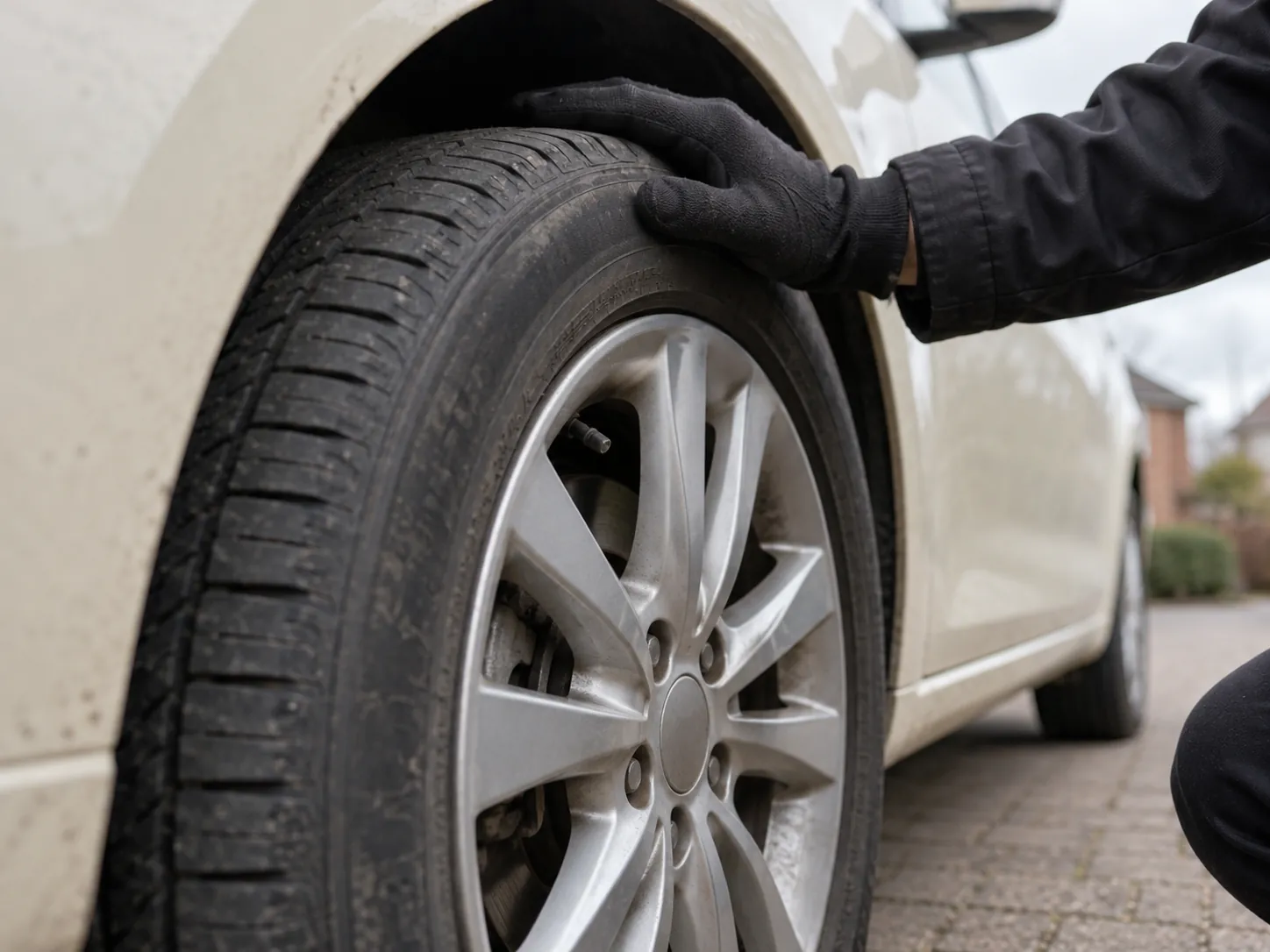
Check the depth before you decide how many tyres to replace.
Pirelli says the 1.6mm legal minimum applies across the central three-quarters of the tread and around the full circumference of the tyre.
What Should You Tell a Mobile Tyre Fitter?
Tell the fitter where you are, your car, the size on the sidewall, and the season and brand range you prefer.
| Detail | Why it matters | What Rapid says |
|---|---|---|
| Tyre size | It avoids a wrong fit | Rapid asks for it and confirms it on the call |
| Brand or range | It sets the model | You choose on the call |
| Season | It sets the rubber type | Rapid fits winter or all-season tyres if you ask |
| Matching tyre | It affects wear | The technician checks the tread and advises on a pair |
| Warning light | It shows pressure loss | The technician resets it after a fit |
| Record | It lists what you bought | You receive an invoice with the tyre details |
If you lost the locking wheel nut key, Rapid says its technician can remove the nut on site.
Rapid says most single car tyre replacements take 20 to 30 minutes from arrival. The technician tightens the wheel nuts to specification and checks all four tyre pressures. Read more about tyre replacement at home and mobile car tyre fitting.
How Does Rapid Help You Choose and Fit Tyres in Bristol?
Rapid fits tyres at your home, workplace or roadside across Bristol and the surrounding area, 24 hours a day, including bank holidays.
Rapid says its technician usually arrives in 45 to 60 minutes, and the same window applies at night. Traffic, technician availability, tyre availability and location can change it, so ask for a live arrival time.
Rapid covers Bristol, Bath, Newport, Weston-super-Mare and Chepstow. Check the areas Rapid covers for your town.
The base is at Ryeleaze, Shirehampton, Bristol BS11 9FN, United Kingdom. Rapid takes cash or online transfer.
Searching for mobile tyre fitting near me? Call or WhatsApp 07494 247246, email info@rapid-tyres.com, or use the contact page.
FAQs About Choosing the Right Tyres
Where do I find my tyre size?
Read it on the tyre sidewall. Michelin says the approved sizes also sit on the driver's door sticker, in the handbook and sometimes inside the fuel filler flap.
Can I fit a higher speed rating?
Usually yes, never a lower one. Michelin says higher ratings can reduce tread life and ride comfort, so check your handbook first.
Are all-season tyres enough for the UK?
They suit mild year-round driving. The RAC calls them a compromise and says winter tyres perform best below 7°C. Look for the 3PMSF symbol if you want snow grip.
Do I need EV-specific tyres?
No. According to What Car?, any roadworthy tyre matching the original size, load and speed rating is legal. Heavy electric cars may need HL tyres.
What does the tyre label tell me?
It grades fuel efficiency, wet grip and external noise. Government guidance says Great Britain and Northern Ireland use different scales.
Does Rapid fit tyres at home?
Yes. Rapid fits at your home, workplace or roadside, 24 hours a day, and you choose the brand or range on the call.
Ready to Choose Your Tyres?
Rapid Mobile Tyres fits the tyres you choose at your home, workplace or the roadside, 24/7 across Bristol and the surrounding area.