
How Climate Change Is Changing Car Design
EVs, heat and flood protection, lighter bodies and new tyres — what UK drivers should know.
Home / Blog / How Climate Change Is Changing Car Design
Your next car may look familiar, yet it is built for a different climate. Hotter summers, wetter winters and tighter emissions rules are reshaping everything from the battery to the tyres.
This guide explains how climate change is changing car design, using UK data. It shows what changes for drivers and what to check on your own tyres.
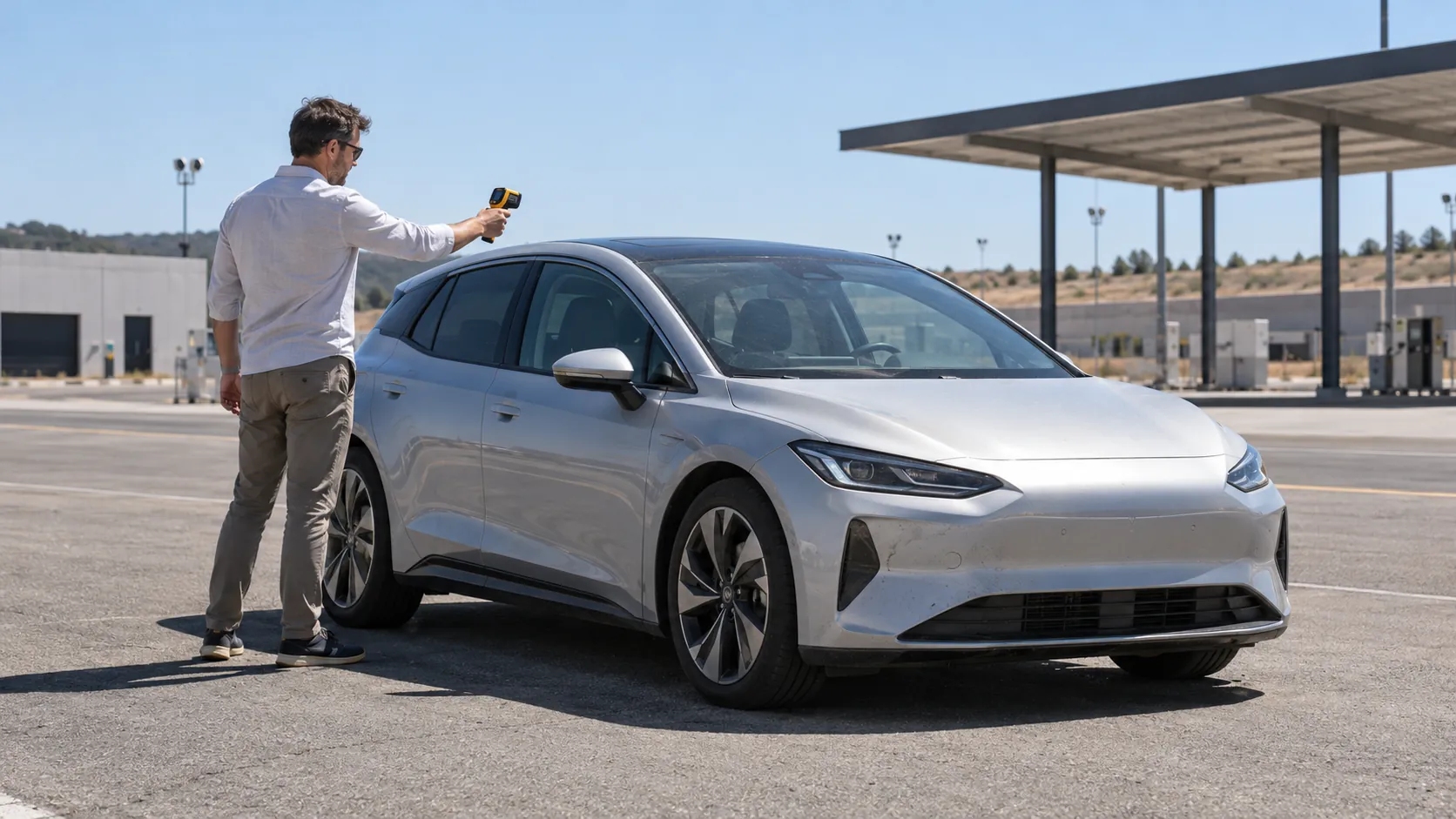
How Climate Change Is Changing Car Design in the UK
Climate change pushes car design in two directions: cut the emissions that cars cause, and cope with the weather that climate change brings.
| Pressure | Design response | What drivers notice |
|---|---|---|
| Emissions rules | Electric and hybrid power, lighter bodies, smoother shapes | More electric cars on UK roads |
| Hotter summers | Stronger cooling for the cabin and battery | Electric range drops in extreme heat |
| Wetter winters | Waterproofed electrical parts and wading limits | A maximum water depth in the handbook |
| Tyre wear and pollution | Low-resistance, longer-lasting, more recycled tyres | New EV-specific tyres |
Emissions rules drive the shift to electric power. Heat, floods and tyre wear then decide how well those cars cope in daily use.
Why Are UK Cars Switching to Electric Power?
UK cars are switching to electric power because the ZEV mandate sets rising sales targets and buyers are responding.
The government confirmed in April 2025 that new petrol and diesel car sales end in 2030, while hybrids can stay on sale until 2035. Carmakers must reach 33% electric sales in 2026, rising to 52% in 2028.
SMMT says battery electric cars took 26.2% of UK registrations in April 2026 and 23.1% across the year to date (5 May 2026). That sits about 10 percentage points short of the 33% target.
Globally, the IEA expects electric cars to make up nearly 30% of new car sales in 2026, about 23 million cars (20 May 2026).
Electric power changes the whole car. Batteries add weight, motors deliver instant torque, and a quiet drivetrain makes tyre noise easier to hear.
What Does Hotter Weather Mean for Car Design?
Hotter weather forces carmakers to cool batteries and cabins harder, and it shortens electric range at the extremes.
The State of the UK Climate 2025 report says 2025 was the UK's warmest year since the series began in 1884, with the warmest spring and summer on record (Royal Meteorological Society, 15 July 2026).
Days above 30°C in Greater London more than quadrupled across 2016 to 2025, compared with 1961 to 1990.
Heat cuts range. Recurrent studied 29,716 US electric cars in 2025 and found about 5% range loss at 32°C and 17% to 18% at 37°C. Cabin air conditioning and battery cooling cause most of it.
Pre-cooling the car while you plug it in saves range, Recurrent says, because holding a cool cabin takes far less power than cooling a hot one.
Even paint colour matters. University of Lisbon researchers found a black car parked for over five hours at 36°C warmed nearby air by up to 3.8°C above the asphalt (Euronews, 27 August 2025).
Black paint reflects 5% to 10% of sunlight, while white reflects 75% to 85%. The researchers suggest lighter paint for fleet vehicles such as taxis and delivery vans.
How Do Floods and Storms Change What Cars Must Handle?
Wetter winters mean cars need sealed electrics, reliable wet grip and clear guidance on water depth.
Across 2016 to 2025, the UK's winter half-year was 3% wetter than 1991 to 2020 and 13% wetter than 1961 to 1990, the State of the UK Climate report says.
Rule 227 of the Highway Code says wet-weather stopping distances are at least double the dry ones, because tyres have less grip.
Electric car lessor Tusker says makers waterproof EV components to strict standards, and it tells drivers to follow the maximum water depth in the handbook (October 2025). It does not recommend driving through floods.
Nottinghamshire County Council advises against crossing fast-moving water, and says to test your brakes as soon as you leave standing water.
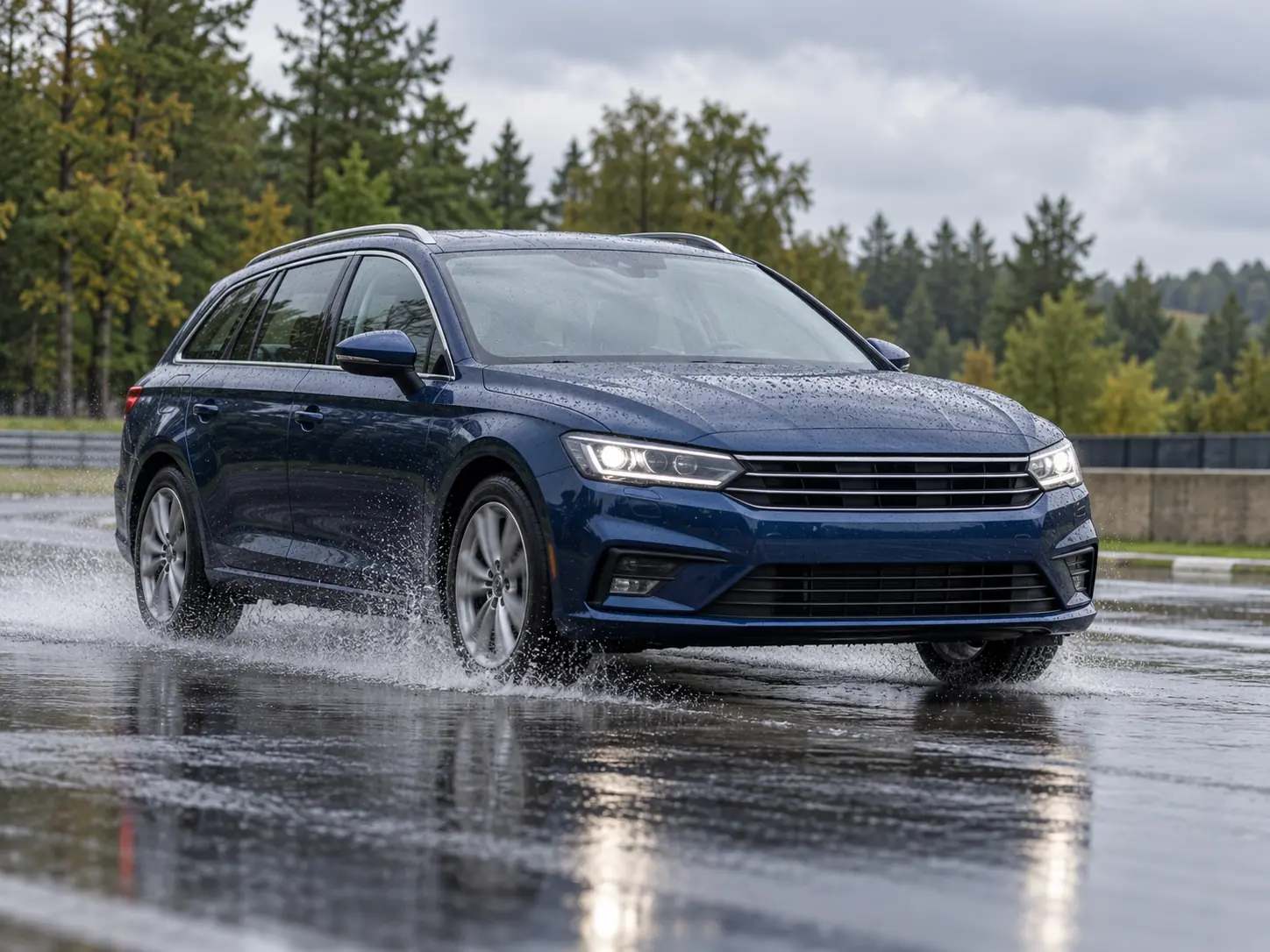
Do Lighter, More Aerodynamic Cars Solve Everything?
No. Lighter materials and smoother shapes help, but electric cars still weigh more than petrol ones, and that weight lands on the tyres.
Kwik Fit says manufacturers are moving from steel towards aluminium and carbon fibre, and adding underbody panels to cut drag (23 March 2025).
Battery packs weigh roughly 350 to 600 kg, Carsa reports, so electric cars typically weigh 20% to 30% more than comparable petrol cars (30 June 2026).
Move Electric cites Emissions Analytics: every extra 450 kg of kerb weight adds about 20% more tyre wear (25 March 2026). Michelin says electric cars can wear tyres up to 20% faster.
Both figures come from a secondary report, so treat them as a guide, not a guarantee. EV-specific tyres with stronger sidewalls and tougher rubber narrow the gap.
How Are Tyres Changing with the Climate?
Tyres are changing in three ways: lower rolling resistance for electric range, more recycled and renewable materials, and lower wear.
Carsa reports independent tests where tyre choice changed real-world electric range by 10% to 16%. Rolling resistance accounts for about 10% of an electric car's energy use, and a modern low-resistance tyre typically adds 5% to 10% range.
Carsa also says 10% under-inflation raises rolling resistance by 1% to 2%, so correct pressures protect range as well as grip.
The big makers now report the share of each tyre made from recycled or renewable material.
| Maker | Latest share | 2030 milestone | 2050 ambition |
|---|---|---|---|
| Michelin | Just over 31% | 40% | 100% |
| Continental | 28.1% (2025) | At least 40% | 100% |
| Bridgestone | 40.0% (2025) | 40% (reached) | 100% |
The Tyre Lab (27 July 2026) notes these figures are company-reported and use different scopes. Continental and Bridgestone partly use mass-balance certification, so the shares are not directly comparable.
In June 2026 the UN's WP.29 adopted the first binding abrasion limits for car tyres. They apply from 30 June 2028 in countries that adopt them, and UNECE estimates they could cut tyre abrasion by more than 10% (Pew, 7 July 2026).
Milder winters also push UK drivers towards all-season tyres. GfK data covered by Tyrepress showed UK all-season units up about 6% in the year to March 2024.
Quiet cabins make tyre noise stand out, which is why silent tyres appear on more electric cars.
What Should UK Drivers Check Now?
Check your tyre pressures, tread, load rating and the handbook's water-depth limit before the weather turns.
Pressures in heat
Davanti says to check weekly in hot weather, several hours after driving, because hot tyres give false readings (25 June 2026).
Sidewalls
Davanti warns that UV can dry rubber and cause cracks, so inspect the sidewalls in a heatwave and park in shade.
Tread
The legal minimum is 1.6mm, the Motor Ombudsman says (June 2026).
Load rating on electric cars
Carsa says many need extra-load or high-load tyres. A lower rating can be unsafe and can void the warranty.
Smooth driving
Move Electric advises gentle acceleration and braking, and Eco mode, to slow tyre wear.
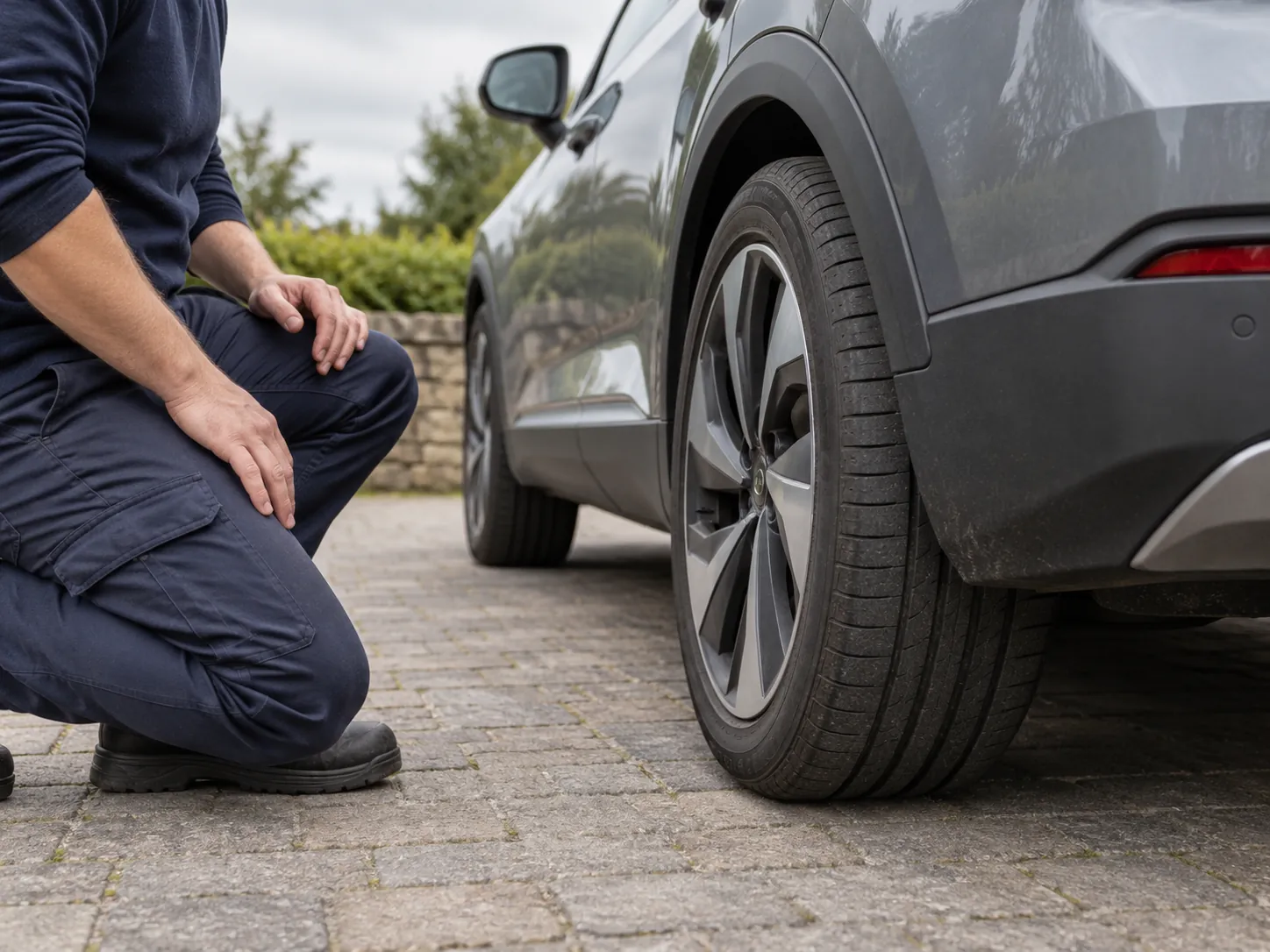
How Does Rapid Mobile Tyres Help?
Rapid Mobile Tyres fits tyres at your home, workplace or roadside across Bristol and the surrounding area, 24 hours a day.
Rapid says it fits EV-rated tyres, as well as run-flat and specialist tyres, for cars, SUVs, 4x4s and vans. Its technicians check all four tyre pressures before they leave.
Start with mobile tyre fitting. Rapid also covers car tyres, SUV tyres and van tyres, and offers tyre replacement at home.
A burst or flat tyre needs emergency tyre fitting, and Rapid says its technician usually arrives in 45 to 60 minutes. Check the areas Rapid covers.
Call or WhatsApp 0117 205 5494, or use the contact page.
FAQs About Climate Change and Car Design
Is climate change really changing car design?
Yes, mainly through emissions rules and weather. The ZEV mandate pushes electric power, while hotter summers and wetter winters affect cooling, sealing and tyres. Not every change has a single cause.
Do electric cars wear tyres faster?
Often, yes. Emissions Analytics, cited by Move Electric (March 2026), links each extra 450 kg to about 20% more wear. EV-specific tyres narrow the gap.
Are tyres becoming more sustainable?
Slowly. Michelin reports just over 31% recycled or renewable material, Continental 28.1% and Bridgestone 40.0%. All three figures are company-reported (The Tyre Lab, July 2026).
When does the UK stop selling new petrol and diesel cars?
In 2030, with hybrids allowed until 2035, the government announced in April 2025. Check the latest rules before you buy.
Can you drive an electric car through floodwater?
Follow the handbook's maximum depth and avoid fast-moving water. Tusker says makers waterproof EV components to strict standards, yet it does not recommend driving through floods.
Does hot weather damage tyres?
It can. Davanti warns that heat raises tyre pressure and UV cracks rubber, so check pressures weekly in a heatwave.
Ready for the Next Set of Tyres?
Rapid Mobile Tyres fits EV-rated, run-flat and specialist tyres at your home, workplace or the roadside, 24/7 across Bristol and the surrounding area.