
If you drive around Bristol through a wet November, it is easy to wonder whether winter tyres are something you actually need, or just a habit copied from colder parts of Europe. UK law does not require them, and many South West drivers get through the season on a well-chosen all-season tyre. A dedicated winter set can still make sense if you regularly face colder roads, early starts, or routes that ice over.
This guide covers what winter tyres do, how to read the markings, how they compare with all-season and summer tyres, and when a change is worthwhile in Bristol and the wider South West.
Short answer: does a Bristol driver need winter tyres?

No — not as a legal must, and not as a default for every car in the city. Winter tyres are optional in the UK. For a lot of Bristol and South West driving, a good all-season tyre in sound condition is the more practical choice, especially if most of your miles are urban or on well-used A-roads, and you can avoid the worst weather when it arrives.
A dedicated winter set is worth considering if your week regularly takes you onto colder, higher or less treated roads — early runs towards the Mendips or the Cotswolds, trips into Wales, or journeys you cannot postpone when ice is forecast. It also helps if you leave at first light, when untreated side streets and shaded stretches are at their slipperiest.
The climate here is milder than much of northern Britain, but that is not a free pass. Decide from your actual routes and start times, not from a national headline.
What winter tyres actually do
Winter tyres are built for cold roads, not only for deep snow. The RAC describes three main differences from a typical summer tyre: a softer rubber compound, deeper grooves, and narrow cuts in the tread known as sipes. In low temperatures a summer compound can harden. A winter compound is designed to stay more flexible, which helps the tyre keep contact with a cold, wet or slushy surface.
The tread and sipes bite into snow and help clear water and slush, so they can still be useful on a cold, wet Bristol morning when there is no snow on the ground. The RAC notes that they are typically intended for conditions below around 7°C, and that in those conditions they can outperform a conventional summer tyre for traction, cornering grip and braking — whether or not ice or snow is present. Tyresafe testing, as reported by the RAC, found the advantage more marked in the cold, and wider still on snow. This guide does not quote laboratory distances.
Check the size, load and speed rating against your vehicle, and look for the three-peak mountain snowflake symbol covered below. They work best as a matched set of four, fitted before the first really cold spell.
UK law: are winter tyres required?
Winter tyres are not required by UK law. You can legally drive on summer or all-season tyres through the winter, provided they meet the usual standards for condition, tread depth and suitability for the vehicle. The RAC is clear on this: they are not mandatory here, and only a relatively small share of UK drivers choose to fit them, often in more remote or regularly icy areas.
Michelin’s UK guidance makes the same distinction. In the UK there is no date when you must switch. Some European countries do require certified winter tyres for part of the year, in certain weather, or with a minimum winter tread depth. Those rules vary, and they can change. If you plan a winter trip abroad, check the local requirement before you travel — both Michelin and the RAC advise this — rather than assuming a UK-legal tyre will automatically be accepted.
Your tyres must still be legal and right for the car. If a winter set has a lower speed rating than your usual fitment, keep to that lower limit. Michelin notes that, in Europe, a reminder sticker should then be placed where the driver can see it. Confirm that with the fitter, and speak to your insurer if the policy mentions tyre type.
How to read the sidewall: M+S vs 3PMSF
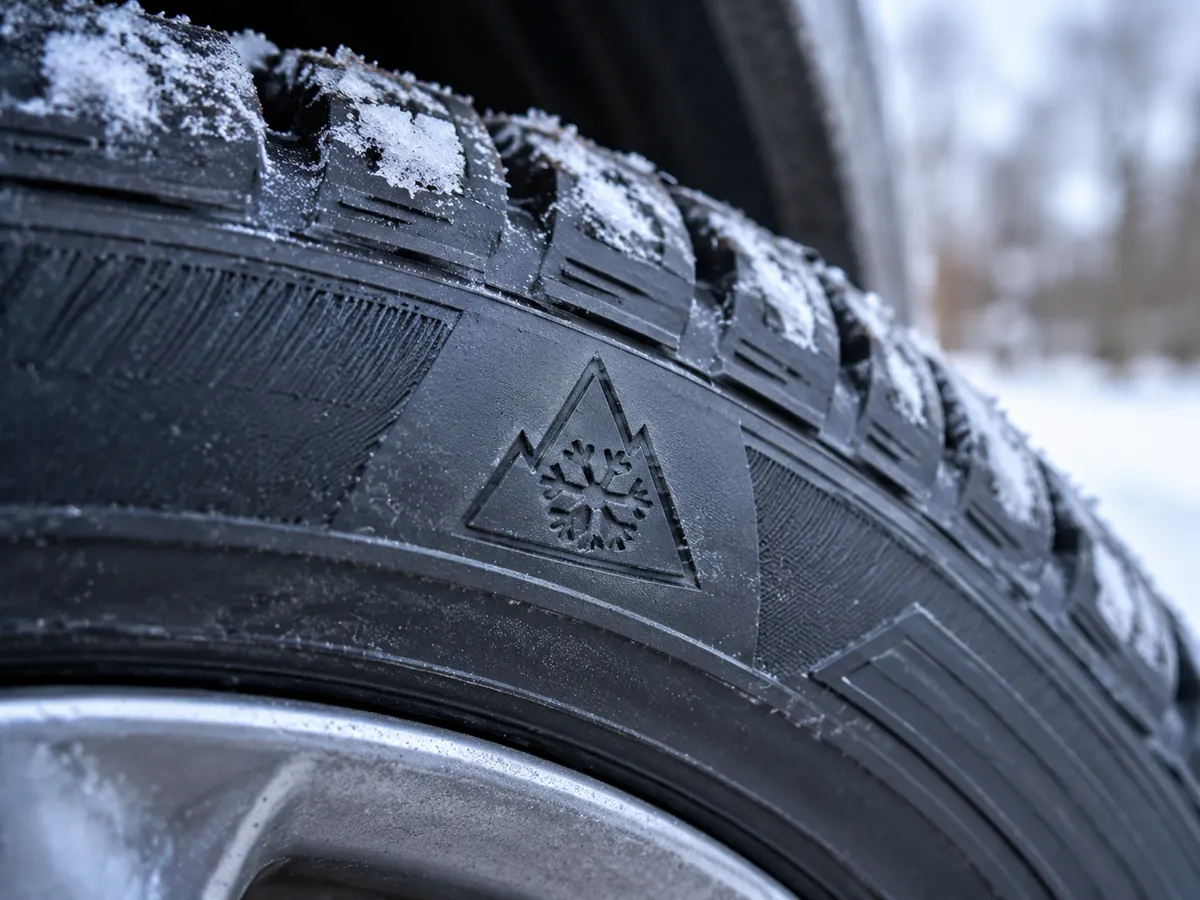
Two markings cause the most confusion: M+S and the three-peak mountain snowflake symbol, usually shortened to 3PMSF. They are not the same thing, and the RAC specifically warns against treating them as interchangeable.
M+S stands for Mud and Snow. Michelin’s explanation of the European rules is that this mark classes the tyre as a “snow” tyre, but its winter performance has not had to be proved in a test. It is a manufacturer’s self-certification, not a measured guarantee of winter grip.
The 3PMSF symbol has to be earned. Michelin states that tyres carrying it must have passed a regulated winter performance test, using a method set out by the European Tyre and Rim Technical Organisation (ETRTO). If you want a tyre for cold, snow or ice, look for this mark. Many all-season tyres now carry it as well. You may see both marks on the same tyre; it is the snowflake that shows the test has been met.
For size codes, dates and other sidewall stamps, see our guide to how to read your tyre sidewall markings. For load and speed ratings, use the complete guide to choosing the right tyres. The same markings apply to electric cars and 4x4s. A 4x4 does not remove the need for a tyre that works in the cold, and an EV still needs the correct size, load and speed rating — details that belong in the complete choosing guide above.
Winter vs all-season vs summer tyres
Think of the three types as different tools, not as a quality ranking.
Summer tyres are the default on many UK cars and are designed for milder and warmer conditions. They can be capable in the wet when the tread is healthy, but as temperatures fall towards and below the commonly cited 7°C mark, their compound is working outside the range it was designed for. They are not the first choice for regular ice or cold, early starts.
Winter tyres use a colder-weather compound and a sipe-heavy tread. They are the stronger option when you often drive in the cold, or cannot avoid untreated roads. They are not meant to stay on year-round: in milder or hot weather that softer compound can wear more quickly and will not behave like a summer tyre. Fit them for the cold months, then change back.
All-season tyres sit in the middle, and for many Bristol drivers they are the practical answer. A modern all-season tyre with the 3PMSF mark can cover a mixed year — wet autumn streets, the odd frosty morning, and ordinary summer use — without the cost and storage of two complete sets. It will not match a dedicated winter tyre in a hard cold snap, nor a summer tyre in a long hot spell, but it avoids the twice-yearly change. The RAC describes all-season or all-weather tyres as a compromise between winter and summer performance.
If most of your driving is around Bristol, Bath or the nearer South West towns, on roads that are usually treated, a quality all-season tyre is often enough. If you regularly use colder or more rural roads, start before the gritters have been, or cannot miss a journey when the road is frozen, a dedicated winter set is easier to justify. Do not mix types on the same car. If you change, change all four.
When to fit and when to change back
There is no legal changeover date in the UK. Michelin’s rule of thumb is the one you will hear most often: when road temperatures drop below 7°C with some regularity, winter or winter-capable all-season tyres start to be the more suitable choice. Another informal guide, also noted by Michelin, is to switch towards winter around Halloween and back towards summer around Easter. Treat both as reminders, not as a statute. A mild December and a raw March are both possible in the South West, so the thermometer matters more than the calendar alone.
Fit them before you need them, rather than on the first icy commute. If you are staying on all-season tyres, they can stay on, but still check condition before the cold, wet months arrive. Change winter tyres back once milder weather is settling in. Leaving them on through a warm summer is a poor trade: they can wear faster, and their behaviour is not what a summer or all-season tyre is for. If you only run one all-season set, ignore the swap and keep an eye on tread depth and age.
Fitting all four, storage, and insurance
Fit winter tyres in a set of four. A winter pair only on the driven axle leaves the other end of the car on a different compound and tread, which can make the handling inconsistent. Match the set for all-season replacements too.
If you run two sets, you will need somewhere dry to keep the tyres you are not using — at home, in a garage, or in a tyre centre’s storage service, sometimes called a “tyre hotel”. Charges vary, so ask about cost, access and labelling.
Insurance is a check, not an assumption. The RAC notes that fitting winter tyres may not require you to notify your insurer, but requirements can vary. Read the policy, or call the insurer if you are unsure, particularly if the winter set has a different speed rating.
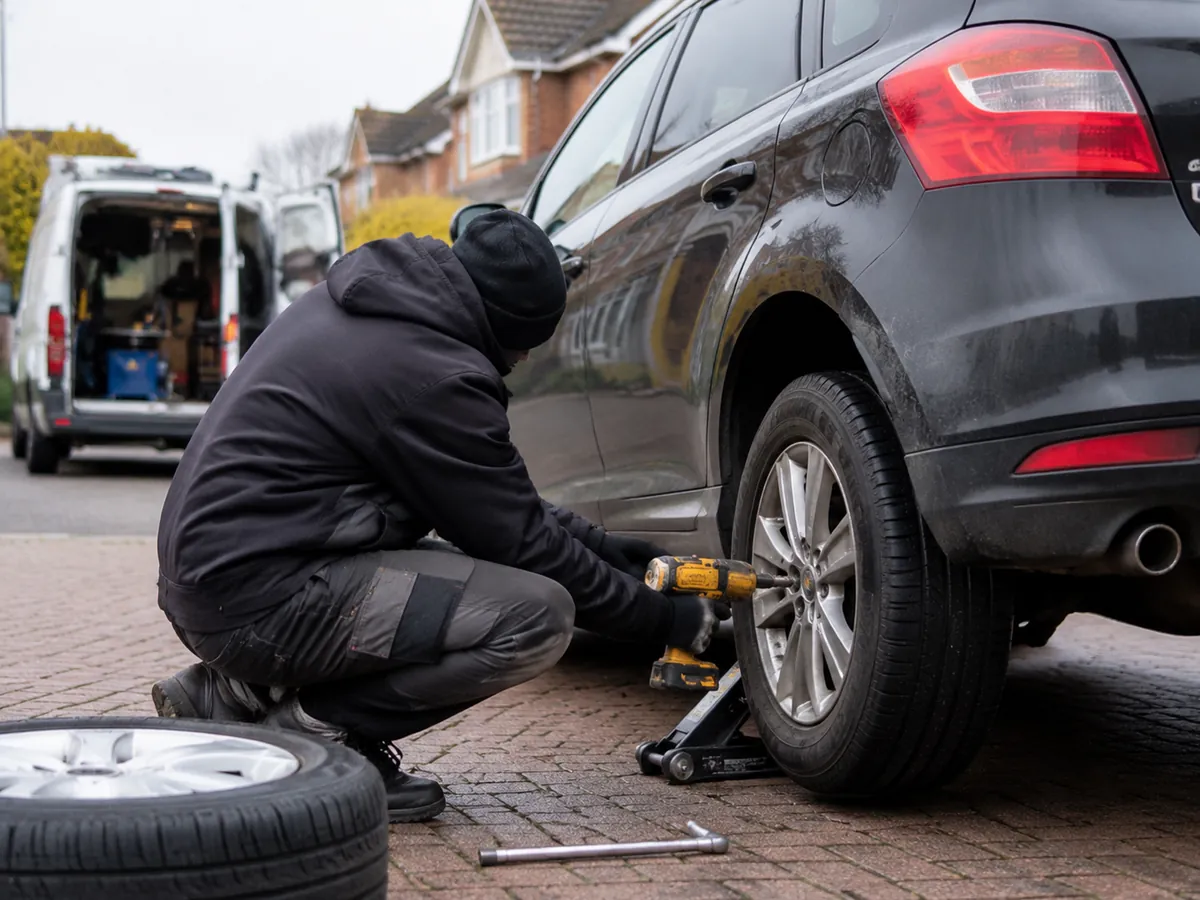
When you are ready to have a new set fitted in Bristol, mobile tyre fitting means the change can be done at home or at work. For local cover, see mobile car tyre fitting in Bristol. Rapid Mobile Tyres fits new tyres — not part-worn.
Winter driving if you keep summer or all-season tyres
Plenty of drivers here will keep their current tyres on, and that can be reasonable if the tyres are legal, evenly worn and still suited to the car. What you should not do is ignore their condition. Worn tread is a problem in heavy rain and slush as well as on a frosty hill. If the pattern is getting close to the legal limit, winter is a poor time to stretch it. We have written separately about the dangers of worn tyres.
Check pressures when the weather turns colder, follow the vehicle handbook, and leave more time. Be wary of shaded bends, bridges and untreated side streets even when the main road looks clear. For size, load and speed rating, use the complete guide to choosing the right tyres for your car. If a tyre fails on a cold night, emergency mobile tyre fitting in Bristol is there when you cannot wait for ordinary hours.
Frequently asked questions
Are winter tyres a legal requirement in the UK?
No. UK law does not require winter tyres. You must still use tyres that are legal and suitable for the vehicle. If you drive abroad in winter, check that country’s rules before you go. The RAC and Michelin both treat UK use as optional.
Do I need winter tyres in Bristol?
Not automatically. Many drivers around Bristol and the South West will be well served by a sound all-season tyre with a 3PMSF marking. A dedicated winter set is more relevant if you regularly use colder or untreated roads, or have to travel when ice is likely.
What is the difference between M+S and the 3PMSF symbol?
M+S (Mud and Snow) is a manufacturer’s designation; Michelin notes that it does not require a winter performance test. The 3PMSF symbol is only used on tyres that have passed a regulated winter test. If winter performance matters to you, look for 3PMSF.
Are all-season tyres good enough for the South West?
For a lot of local driving, yes — provided they are the right size, in good condition, and ideally carry the 3PMSF mark. They have limits in a hard cold spell, but are often the more practical single-set choice here.
Can I fit just two winter tyres?
You should not. A mixed set can make the car’s grip uneven. Fit four matching tyres of the same type.
Should I leave winter tyres on in summer?
It is better not to. In milder or hot weather they can wear more quickly and will not behave like a summer or all-season tyre. Change back once the cold spell is behind you, unless you run all-season tyres year-round.
Can Rapid Mobile Tyres fit winter or all-season tyres at home or work in Bristol?
Yes. Rapid Mobile Tyres offers 24/7 mobile fitting of new tyres, including winter and all-season sizes that match your car, at home or at work in Bristol and the surrounding areas we cover. Call 07494 247246, or use the contact page, to check availability and book.
Getting winter or all-season tyres fitted in Bristol
If you have decided on a winter or all-season set, Rapid Mobile Tyres can fit new tyres at your home or workplace, around the clock. We are based in Ryeleaze, Shirehampton, and cover Bristol plus surrounding South West areas including Bath, Weston-super-Mare, Chepstow, Newport, Gloucestershire and the other towns listed on our areas we cover page.
For questions, or to arrange a fitting, call 07494 247246 or visit the contact page. You can also browse more practical tyre advice on the blog.