
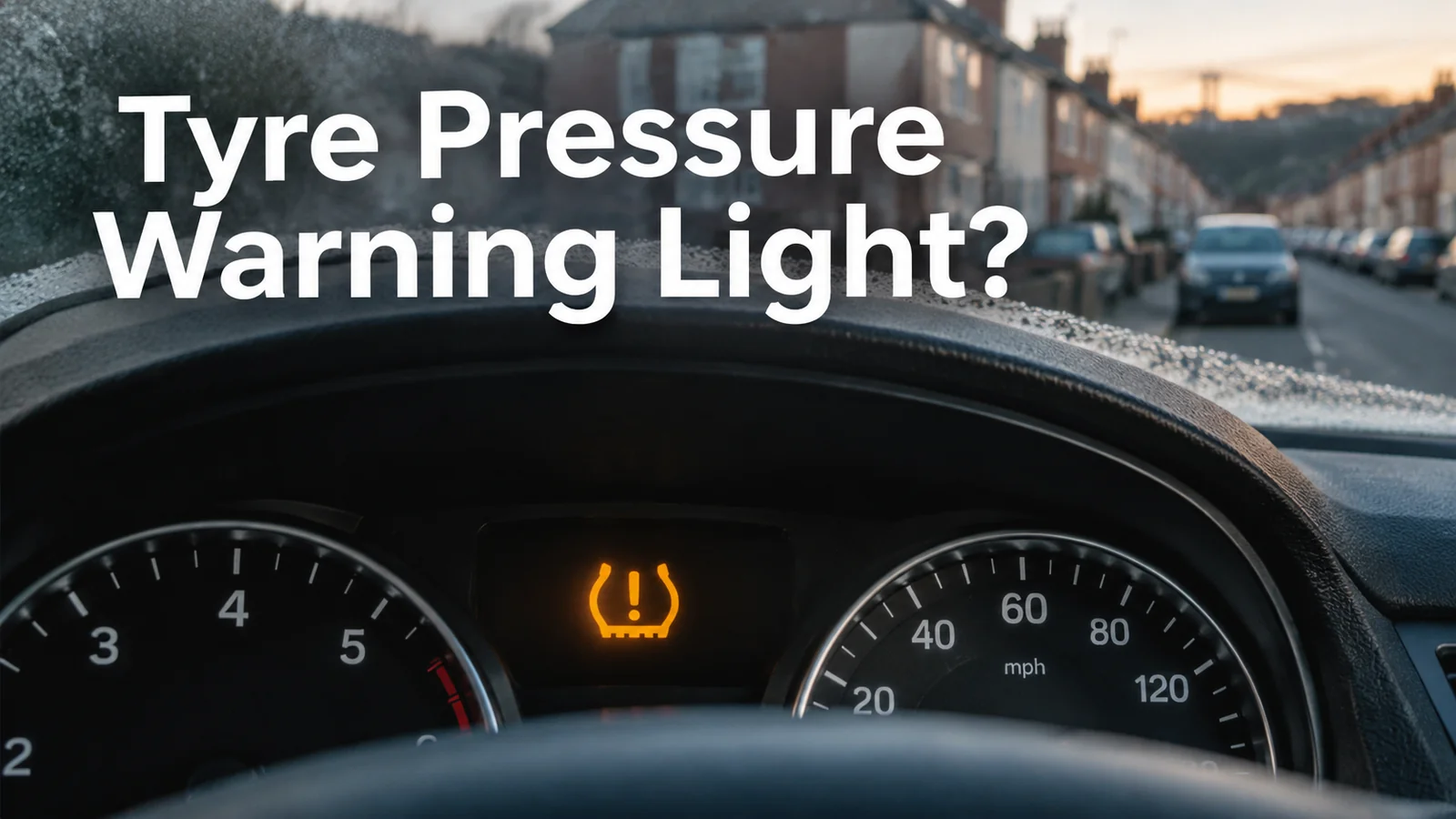
The amber symbol that looks like a horseshoe with an exclamation mark in the middle is your car's tyre pressure warning light. It often pops up on the first cold morning of winter, just as you pull out of the drive or join the A4 or the M32. It might just mean a tyre needs air, or it might be the first sign of a puncture.
This guide explains what the light means, the difference between a solid and a flashing light, whether you can keep driving, how to check and reset it, and when it is time to call a mobile tyre fitter in Bristol.
Short answer: what to do when the tyre pressure light comes on
- Slow down and drive smoothly. Avoid hard braking and sharp steering.
- Pull over somewhere safe as soon as you reasonably can, such as a car park, a fuel station or a quiet side road. Never stop on a motorway hard shoulder just to look at the tyres unless you have to.
- Look at all four tyres. If one is visibly flat, bulging or damaged, do not drive on it.
- Check the pressures with a gauge and inflate to the figures in your handbook or on the sticker inside the driver's door or fuel filler flap.
- Reset the system if your car needs it, then drive normally and see if the light goes out.
- If the light stays on, comes back or flashes, have the tyres and system checked.
If a tyre is flat or damaged, call 07494 247246 and we can come to you rather than you driving on it.
What is the tyre pressure warning light?
The light comes from your car's tyre pressure monitoring system (TPMS). Pirelli explains that TPMS has been required on new cars in the UK since November 2014, to warn drivers when tyre pressures fall below a level set by the car maker. Many earlier cars have it too.
The RAC says the warning is typically triggered only when one or more tyres are well below their recommended pressure. That is a big drop, so by the time the light comes on, the tyre is already well below where it should be.
The symbol is usually amber or yellow and shows the cross-section of a tyre with an exclamation mark. Some cars also show which tyre is low, or display the pressure of each tyre on the dashboard screen.
Direct and indirect TPMS
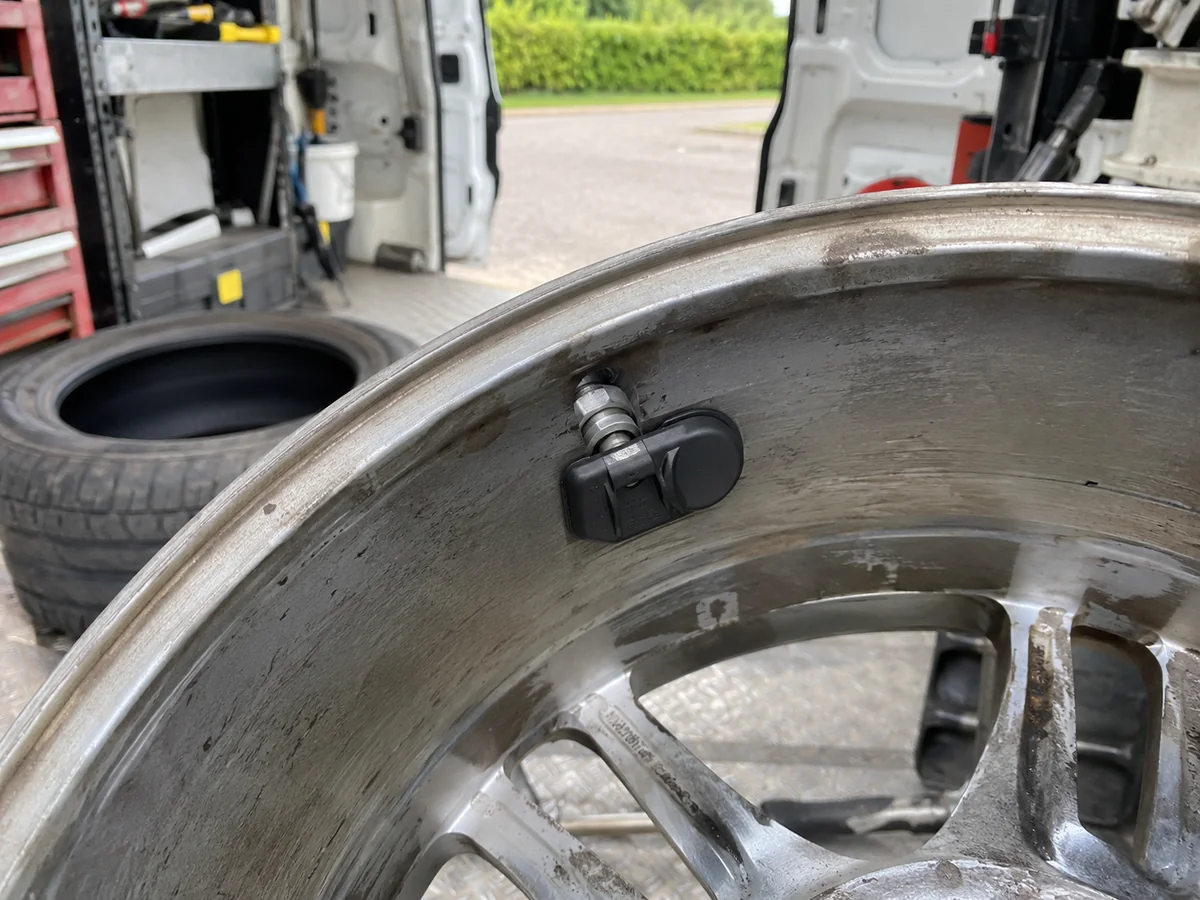
There are two main types, and knowing which one your car has helps you understand the warning:
- Direct TPMS uses a small battery-powered sensor in each wheel, usually attached to the back of the valve. It measures the actual pressure and sends it to the car.
- Indirect TPMS has no sensors in the wheels. It uses the ABS wheel-speed sensors to spot a tyre that is rotating at a different speed, which happens when a tyre loses pressure.
Your handbook will tell you which type you have. As a rough guide, if your dashboard can show the pressure of each individual tyre, it is likely to be a direct system.
Solid, flashing or coming and going: what each light usually means
| What you see | What it usually means | What to do |
|---|---|---|
| Light comes on and stays on | One or more tyres is low on pressure, possibly from a puncture | Stop safely, check all four tyres and pressures |
| Light flashes for a while when you start the car, then stays on | Usually a fault with the TPMS itself, such as a sensor | Check pressures anyway, then have the system checked |
| Light comes on during cold mornings and goes off later | Cold air lowering pressures that were already borderline | Check and top up the pressures when tyres are cold |
| Light comes back soon after you inflate the tyres | A slow puncture, a leaking valve or damage to the tyre or wheel | Have the tyre inspected before driving far |
The RAC notes that a flashing light usually points to a problem with the system rather than the pressure itself, while a constant light means there may be a serious loss of pressure or a puncture. Whatever the pattern, the safest first step is always the same: check the actual pressures with a gauge.
Is it safe to drive with the tyre pressure light on?
Not for long, and not until you know why it is on. The RAC says it is not illegal to drive with the light showing, but it does not recommend travelling far with it lit, because you may have a puncture or a fault with the wheel or tyre. If the cause is a dangerous tyre, the car is not roadworthy.
An under-inflated tyre:
- takes longer to stop the car, especially in the wet;
- makes steering feel vague and less stable;
- flexes more and builds up heat, which can damage the tyre's internal structure where you cannot see it;
- wears faster at the edges.
Pirelli advises assuming the tyre is under-inflated whenever the light is on, and checking it as soon as possible. If you must drive a short distance to a safe place to check it, keep your speed down and drive gently.
Do not drive on a tyre that is flat, has a visible bulge, a cut in the sidewall or exposed cords. Driving on a flat can ruin a tyre that might otherwise have been repairable, and can damage the wheel.
How to check your tyre pressures properly
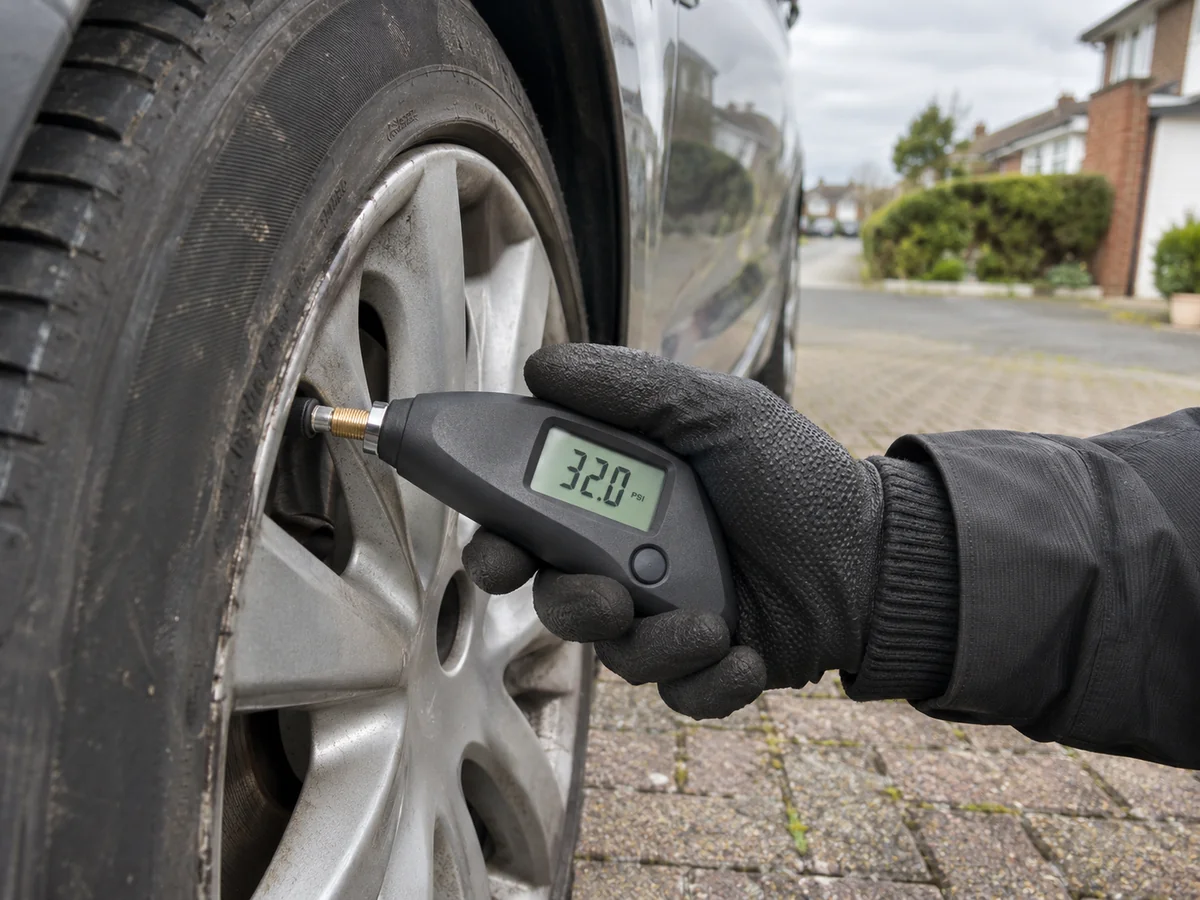
1. Find the right figures
The correct pressures are in your handbook and usually on a sticker inside the driver's door frame or the fuel filler flap. Front, rear and full-load figures can differ, so use the ones for your tyre size and load.
2. Check when the tyres are cold
Ford advises checking pressures when the tyres are cool, ideally after the car has been parked for at least three hours or driven less than two miles. Warm tyres read higher, which can hide a low tyre.
3. Use a reliable gauge
A digital or dial gauge from a motor factor is fine, or use the air machine at a fuel station. Remove the valve cap, press the gauge firmly onto the valve and read the pressure. Add air if it is low; if you overfill, release a little and check again. Refit the valve caps to keep dirt and moisture out.
4. Check all four tyres, not just the one that looks low
Indirect systems in particular cannot always tell you which tyre is low, and two tyres can lose pressure at the same rate. If your car has a spare with a sensor, Tyres.co.uk points out that a low spare can trigger the warning too.
5. Look at the tyres while you are there
While you are crouched by each wheel, look for nails or screws in the tread, cuts, cracks or bulges in the sidewalls, and uneven wear. Our guide on how to read your tyre sidewall markings explains what the codes on the side of the tyre mean.
How to reset the tyre pressure warning light
Once the pressures are correct, some cars clear the warning on their own after a short drive. Others need you to reset the system. The method depends on the make and model, so check your handbook, but common approaches are:
- A reset button, often low on the dashboard or in the glovebox, held for a few seconds;
- A menu option in the car's settings or infotainment screen, usually called something like "tyre pressure" or "TPMS calibration";
- A short drive: Tyres.co.uk says some systems reset after around 10 to 15 minutes of driving at 30 mph or more once the pressures are right.
Indirect systems in particular must be reset after you adjust the pressures, because they learn the "correct" rolling speed of each tyre from that moment. If you reset an indirect system while a tyre is still low, it can learn the wrong baseline and fail to warn you later.
Why the light keeps coming back
If the warning returns hours or days after you top the tyres up, something is letting air out or the system has a fault. The common causes are:
A slow puncture
A nail or screw in the tread can let air out slowly over days. Many punctures in the central part of the tread can be repaired, depending on the size and position of the damage. Our puncture repair guide explains what a fitter checks first.
A leaking valve or wheel rim
Valves age and can leak, and corrosion on an alloy wheel can stop the tyre sealing properly against the rim.
Cold weather
As the air gets colder, tyre pressures drop. Pirelli notes that if the light is going on and off, temperature changes may be pushing pressures across the limit. In a Bristol winter that can mean the light appears on a frosty morning and disappears by the afternoon. The fix is to check and correct the pressures when the tyres are cold, not to ignore the light. For more on cold-weather driving, see our guide to winter tyres in Bristol.
A faulty or damaged sensor
On a direct system, each sensor has its own battery. Tyres.co.uk says these batteries typically last 5 to 10 years, and sensors can also be damaged when a tyre is changed. A sensor fault often shows as a light that flashes when you start the car and then stays on. Diagnosing and reprogramming sensors needs TPMS diagnostic equipment, so tell us about any flashing light when you call and we will advise on the next step.
Does the tyre pressure light affect your MOT?
It can. The official MOT inspection manual includes the tyre pressure monitoring system for passenger cars first used from 1 January 2012. If the TPMS warning shows a malfunction, or the system is obviously not working, the car can fail. So if the light is on before an MOT, get the cause sorted first.
When to call a mobile tyre fitter in Bristol
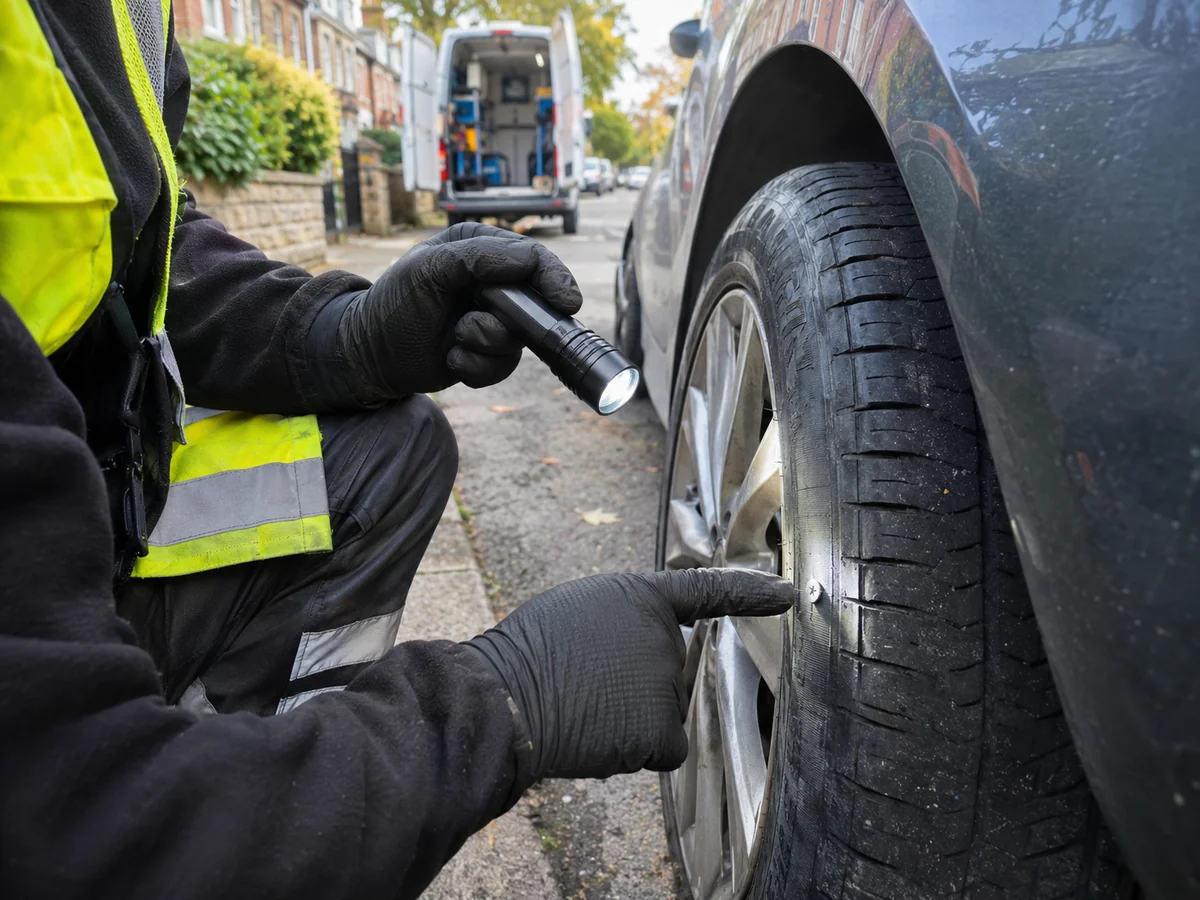
Check the pressures yourself first if it is safe to do so. Call a fitter if:
- a tyre is flat or visibly damaged;
- you have found a nail, screw or cut in the tyre;
- the light comes back soon after you inflate the tyres;
- one tyre keeps losing pressure faster than the others;
- you are not comfortable checking or driving on the tyre.
Rapid Mobile Tyres comes to you at home, at work or at the roadside across Bristol and the surrounding area, 24 hours a day, 7 days a week. Our technician can find the leak, check the valve, inspect the tyre inside and out, and either repair it where it is safe to do so or fit a new tyre. For urgent call-outs, see our emergency mobile tyre fitting in Bristol page, or read more about our mobile tyre fitting service.
If you are running on a space-saver spare while you wait for a replacement, read how long you can drive on a spare tyre.
Frequently asked questions
What does the tyre pressure warning light look like?
It is usually an amber or yellow symbol shaped like the cross-section of a tyre, a horseshoe shape, with an exclamation mark in the middle. Some cars also show which tyre is low.
Can I drive with the tyre pressure light on?
Only as far as you need to reach a safe place to check the tyres. The RAC says it is not illegal, but it does not recommend driving far with the light on because you may have a puncture or a tyre fault. Do not drive on a flat or visibly damaged tyre.
Why is my tyre pressure light on when the tyres look fine?
A tyre can lose a lot of pressure before it looks flat, so always check with a gauge. If the pressures are correct, the system may need resetting, or there may be a sensor fault, especially if the light flashed when you started the car.
Why does the tyre pressure light come on when it is cold?
Cold air lowers tyre pressures. If your tyres were already slightly low, a frosty morning can push them below the warning level. Check and correct the pressures when the tyres are cold.
How do I reset the tyre pressure warning light?
Inflate all tyres to the correct pressures first, then follow your handbook. Many cars use a reset button or a menu option, and some reset themselves after a short drive.
Will the tyre pressure light fail my MOT?
It can. For passenger cars first used from 1 January 2012, the MOT checks the tyre pressure monitoring system, and a warning that shows a malfunction can lead to a fail.
Can you come to me if my tyre pressure light is on in Bristol?
Yes. If a tyre is flat, damaged or keeps losing air, Rapid Mobile Tyres can come to your home, workplace or roadside location in Bristol and the surrounding area, 24 hours a day, 7 days a week.