
Flat Tyre Puncture Repair: What to Check First
How to tell a slow puncture from a faulty valve, what not to do, and how Rapid repairs punctures.
Home / Blog / Flat Tyre Puncture Repair: What to Check First
Your tyre looks low, but there is no nail in sight. Guess the cause wrong and you may drive on a damaged tyre, or wait for a repair you do not need.
Flat tyre puncture repair starts with finding the cause. This guide shows how to tell the difference, what not to do, and how Rapid Mobile Tyres repairs punctures day or night.
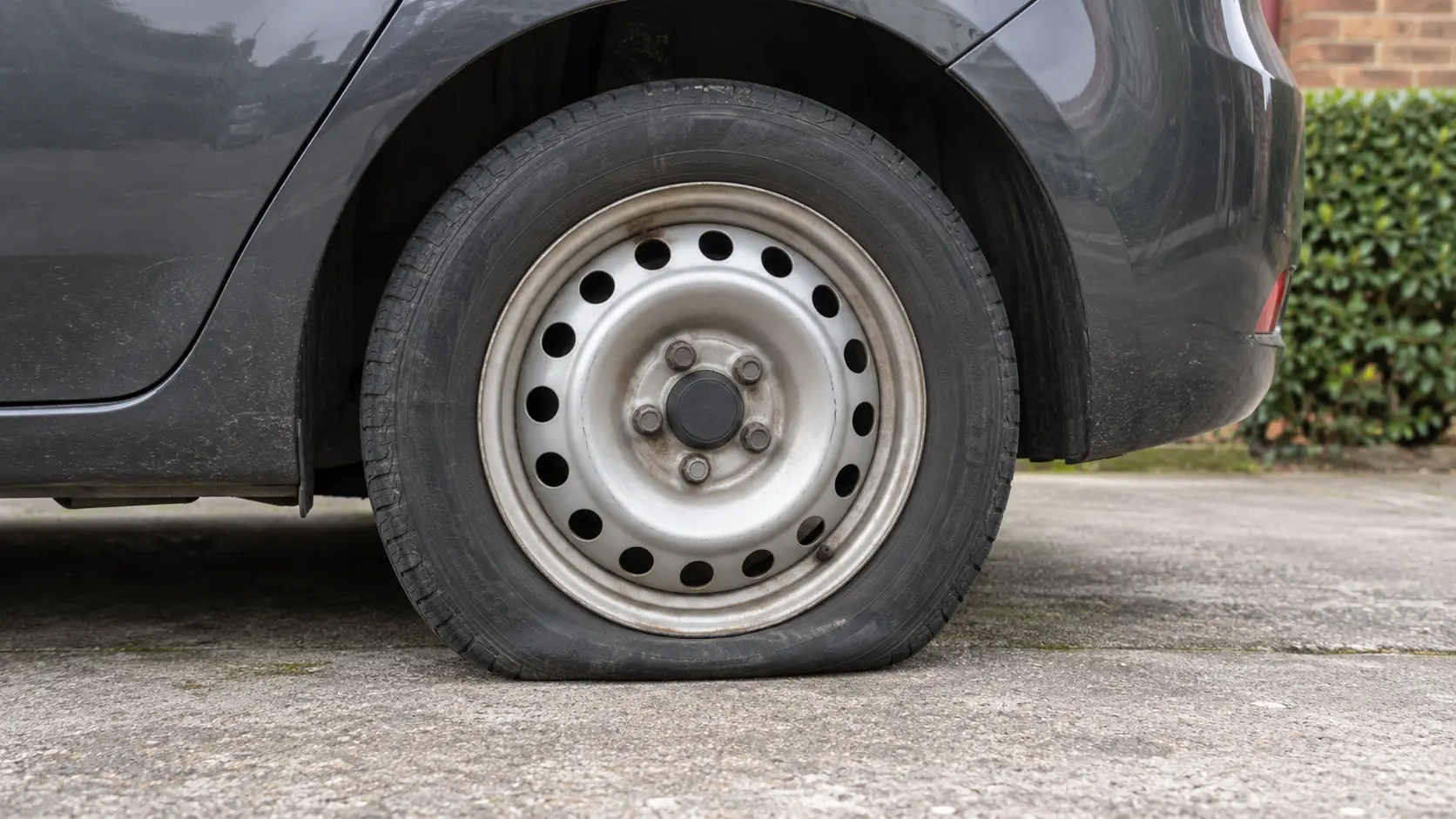
What Is Flat Tyre Puncture Repair?
Flat tyre puncture repair means finding the leak, then repairing the tyre properly from the inside, or replacing it when the damage is too big.
Rapid Mobile Tyres repairs punctures on site as well as fitting new tyres. It works 24 hours a day, 7 days a week, including bank holidays, and says its technician usually arrives in 45 to 60 minutes.
Rapid says the same window applies at night. Traffic, technician availability, tyre availability and location can change it, so ask for a live arrival time. Read more about mobile tyre fitting and emergency mobile tyre fitting.
Is It a Flat Tyre, a Soft Tyre or a Slow Puncture?
A flat tyre is usually a puncture, a soft tyre is usually under-inflated, and a slow puncture loses air over hours or days.
Michelin says a flat tyre usually comes from a puncture, such as a nail hole or a cut. A soft tyre is typically under-inflated.
| What you notice | Likely cause | Next step |
|---|---|---|
| Tyre is visibly flat | A puncture, usually | Stop safely and call a fitter |
| Tyre is soft but holds air | Under-inflation | Inflate to the handbook figure |
| Tyre loses air over days | A slow puncture or a leaking valve | Find the leak or ask a fitter to test it |
| Warning light is on | Pressure loss | Check all four pressures soon |
Total Car Check (October 2025) lists other signs: the car pulls to one side, the steering feels soft or bouncy, or one corner vibrates.
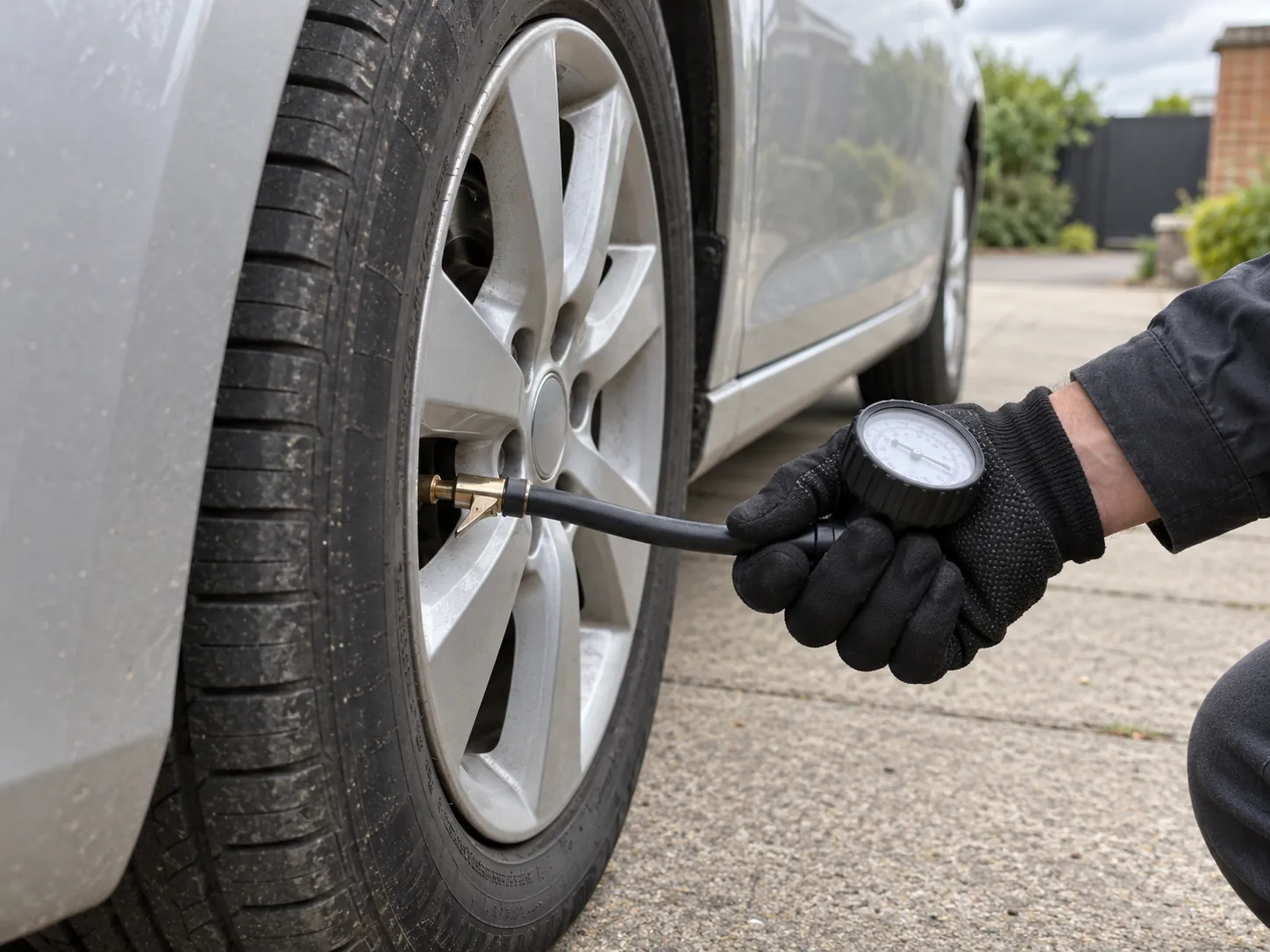
For a soft tyre, Michelin says to add air with a gauge until you reach the pressure in the owner's manual or on the driver's door sticker. Under-inflation wears the tread shoulders and builds heat that can lead to failure.
How Do You Find the Leak?
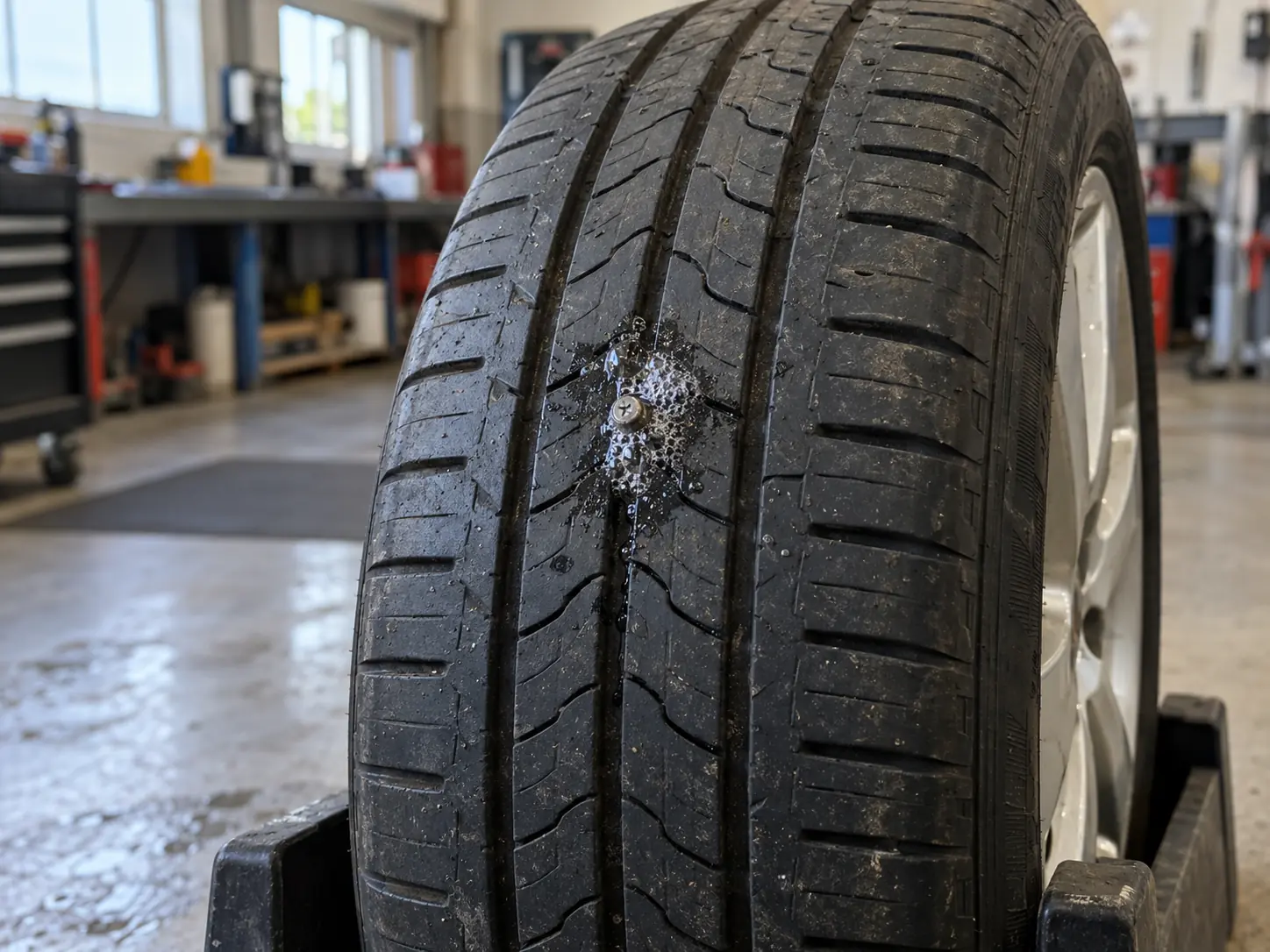
Look for a sharp object first, then use soapy water to find bubbles, and only do it somewhere safe.
Goodyear gives five steps for finding the cause of a flat tyre:
- 1
Look. Check the tread and sidewall by eye for sharp objects.
- 2
Mix. If you see nothing, fill a spray bottle with soapy water or an approved leak detector.
- 3
Inflate and spray. Inflate the tyre, then spray the whole tyre.
- 4
Watch. Bubbles show where the air escapes.
- 5
Get it checked. Have a professional inspect any repair.
Goodyear also lists a faulty valve and a bead sealing fault as causes of slow leaks, so spray the valve too.
Pirelli adds a limit. You may need to inflate a flat tyre partly to find the damage, but only in 5psi steps and never above 15psi.
If you find a nail or glass, the RAC says to leave it in place, because removing it may enlarge the hole.
The RAC also says never to try a tyre job if your personal safety is at risk. If you cannot test the tyre safely, call for help.
Rapid says its technician finds the leak with a leak test and checks the tyre valve as part of the job.
Why Does the Tyre Pressure Warning Light Matter?
The tyre pressure warning light tells you a tyre has lost pressure, and TyreSafe says you need a working system to pass the MOT.
TyreSafe says the system has been mandatory on all new cars since 2014. If the light comes on, slow down and check the pressures at a garage or service area as soon as possible (undated article).
Some systems need a manual reset after you reinflate. If the light returns soon after, a sensor or the system itself may be faulty, TyreSafe says.
Rapid says its technician resets the tyre pressure warning light after a fit. Ask for the same check after a repair.
Is a Pothole the Same as a Puncture?
No. The RAC counts pothole damage and punctures separately.
The RAC's Pothole Index records 26,048 pothole-related breakdowns in 2025, up from 22,703 in 2024, about 15% (page dated 21 October 2026).
The index counts damage such as shock absorbers, broken suspension springs and distorted wheels. It excludes punctures, which can come from nails or screws unrelated to road condition.
After a hard pothole strike, have the tyre and wheel checked, even if the tyre still holds air.
What Should You Not Do with a Flat Tyre?
Do not drive on it, pull out the object, over-inflate it or trust a quick fix.
- Do not drive on a flat tyre: Pirelli says it is unsafe, can damage the wheel and other parts, and the tyre may fail.
- Do not pull out a nail or glass: The RAC says removing it may enlarge the hole.
- Do not inflate above 15psi while searching: Pirelli sets that limit for finding the damage.
- Do not trust a plug-only fix: Michelin says a quick plug on the wheel is unreliable and unsafe.
- Do not treat a sealant kit as a repair: The RAC calls it temporary, so stay under the top speed in your handbook and replace the tyre soon.
- Do not work beside traffic: The RAC says never to try a tyre job if your safety is at risk.
Can You Repair the Puncture?
A puncture in the central tread up to 6mm is generally repairable, and a puncture on or near the sidewall is not.
Goodyear says a hole over 6mm, or one on or near the sidewall, calls for a new tyre. Michelin adds that you must not have driven on the tyre while flat.
Pirelli says manufacturers advise against repairing run-flat tyres, so they are generally replaced.
Rapid's technician inspects the inside of the tyre before every repair and makes the final call. For the full limits and the BS AU 159 standard, read the guide to mobile tyre repair.
If the tyre is beyond repair, Rapid fits a new one. See tyre replacement at home.
What Happens During a Mobile Puncture Repair?
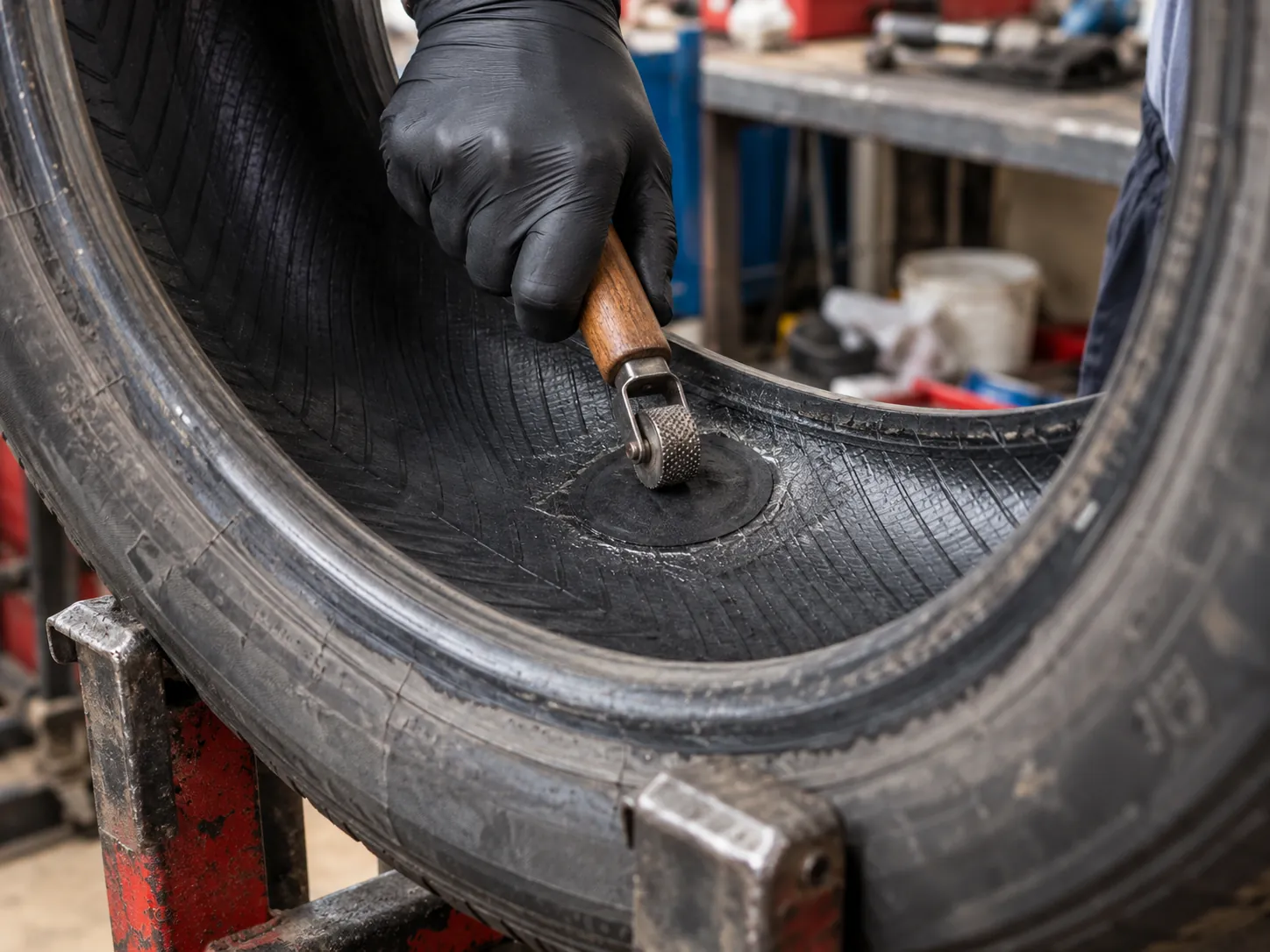
The technician finds the leak, inspects the inside of the tyre, repairs it and rebalances the wheel.
- 1
Find the leak. Rapid's technician tests for the leak and checks the valve.
- 2
Take the tyre off. Michelin describes a proper repair as removing the tyre from the rim and inspecting it inside and out.
- 3
Repair it. Michelin says a professional patches the inner liner and fills the hole.
- 4
Finish. Rapid says it rebalances the wheel and fits a new valve after a repair.
Rapid says it repairs punctures at night as well as by day.
What Should You Check After a Puncture Repair?
Check the pressure, watch the warning light, and look for any loss of air over the next days.
- Pressure: Set all four tyres to the figure in your handbook or on the door sticker, Michelin says.
- Warning light: If it stays on, ask the technician to check.
- Air loss: Pirelli says a pressure drop of more than 25% suggests the tyre has damage or needs attention.
- Repair quality: Pirelli says a tyre repaired to BS AU 159 should match a healthy tyre for durability, load capacity and maximum speed.
How Does Rapid Help with Flat Tyre Puncture Repair in Bristol?
Rapid repairs and replaces tyres at your home, workplace or roadside across Bristol and the surrounding area, 24 hours a day.
Rapid covers Bristol, Bath, Newport, Weston-super-Mare and Chepstow. Check the areas Rapid covers for your town.
The service covers car tyres and more. If the tyre is beyond repair, read about emergency tyres 24/7 and what to do in the first minutes of a flat.
The base is at Ryeleaze, Shirehampton, Bristol BS11 9FN, United Kingdom. Rapid takes cash or online transfer.
Searching for puncture repair near me? Call or WhatsApp 0117 205 5494, email info@rapid-tyres.com, or use the contact page.
FAQs About Flat Tyre Puncture Repair
Can you repair a slow puncture?
Yes, if the hole is in the central tread and no larger than 6mm. Rapid's technician finds the leak, checks the valve and inspects the inside of the tyre before repairing it.
Can I drive on a flat tyre to a garage?
No. Pirelli says driving on a flat is unsafe, can damage the wheel and other parts, and the tyre may fail.
Does Rapid repair punctures at night?
Yes. Rapid repairs punctures 24 hours a day, 7 days a week, with the same usual 45 to 60 minute arrival window.
Why is my tyre pressure warning light on?
A tyre has lost pressure, or the system has a fault. TyreSafe says to check the pressures soon, and to fix the system if the light returns.
Is a pothole the same as a puncture?
No. The RAC Pothole Index counts pothole damage to parts such as suspension and wheels, and excludes punctures from nails or screws.
Do you replace the valve after a repair?
Yes. Rapid says it rebalances the wheel and fits a new valve after a repair.
Spotted a Flat Tyre?
Rapid Mobile Tyres repairs and replaces tyres at your home, workplace or the roadside, 24/7 across Bristol and the surrounding area.