
Mobile Tyre Repair Services: Convenience at Your Doorstep
How mobile tyre repair works, which punctures are repairable, and what to do while you wait.
Home / Blog / Mobile Tyre Repair Services: Convenience at Your Doorstep
A flat tyre rarely arrives at a good moment. Driving to a garage means rolling on damaged rubber, and waiting for recovery wastes your day.
Mobile tyre repair solves this by sending a technician to you. This guide explains how it works, which punctures a technician can fix, and what to do while you wait.

What Is Mobile Tyre Repair?
Mobile tyre repair is a service where a technician drives to your home, workplace or roadside and repairs a punctured tyre there, where it is safe to do so.
You may also see it called mobile puncture repair or on-site tyre puncture repair. It suits slow punctures, nails or screws in the tread, and flats that leave the car undriveable.
If the tyre is beyond repair, the visit becomes a replacement, as with mobile tyre fitting.
What Are the Benefits of Mobile Tyre Repair?
The main benefit of mobile tyre repair is that you skip the trip to a garage and carry on with your day.
- No towing: Start Rescue says a mobile visit avoids a tow when damage is too serious to drive on (May 2024).
- No waiting room: The technician comes to you, so you stay at home or at work.
- Help away from home: You avoid searching for an unfamiliar garage.
Mobile repair has limits too. Start Rescue lists varying fitter experience and extra time to source specialist tyres as the main downsides.
When Should You Call for Mobile Tyre Repair?
Call for mobile tyre repair as soon as you spot a puncture, a flat tyre or the signs of a slow leak. WhoCanFixMyCar lists four warning signs of a slow puncture:
- The car pulls to one side.
- The steering vibrates.
- The tyre pressure warning light comes on.
- The steering feels heavier or less responsive.
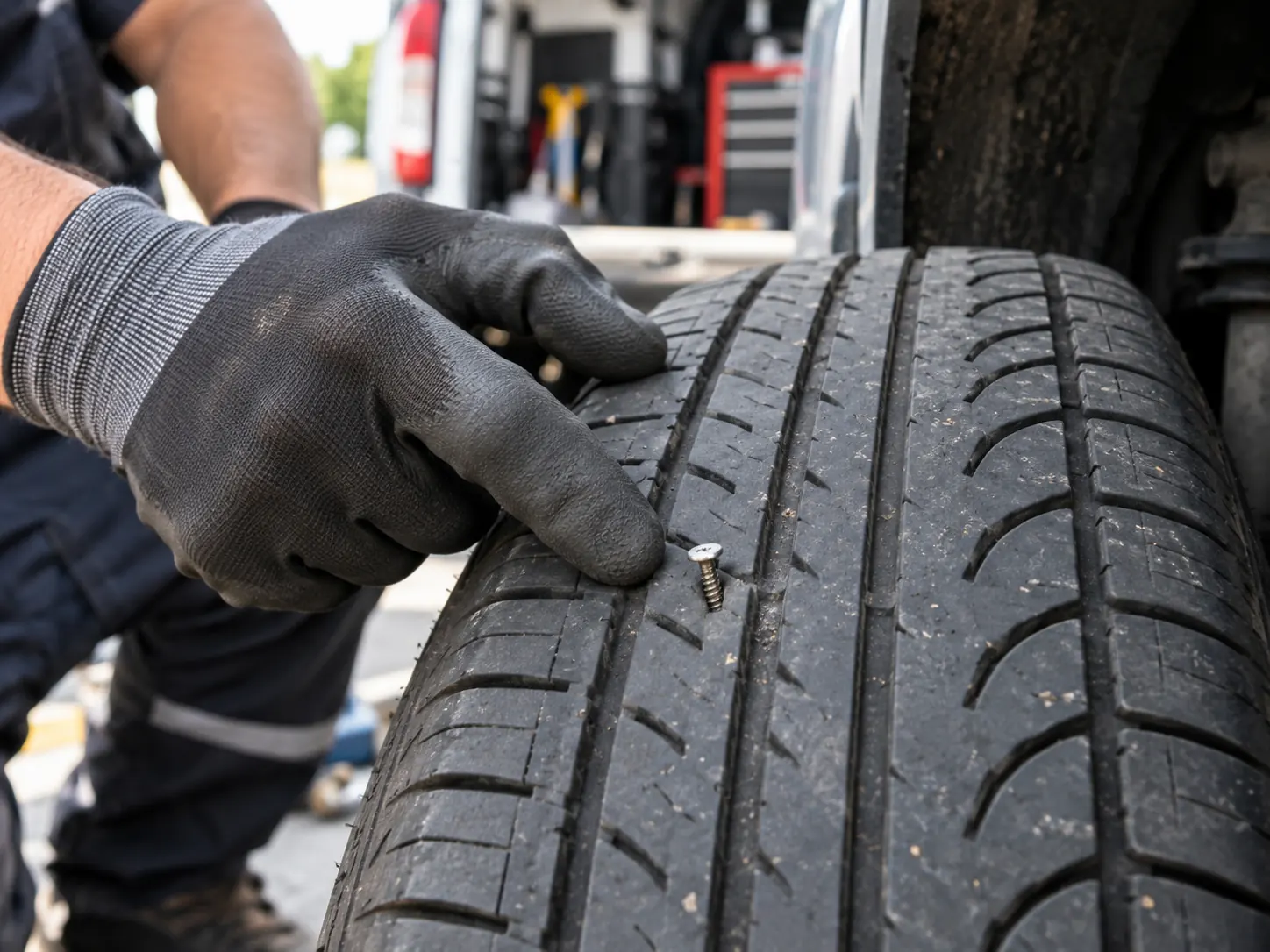
Pirelli lists a pressure drop of more than 25% as a sign that the tyre is damaged or needs inflating. A nail or screw in the tread is another reason to call.
Avoid driving on a flat tyre while you wait. Green Flag warns that a long drive on a flat can damage the structure beyond repair.
How Does Mobile Tyre Repair Work, Step by Step?
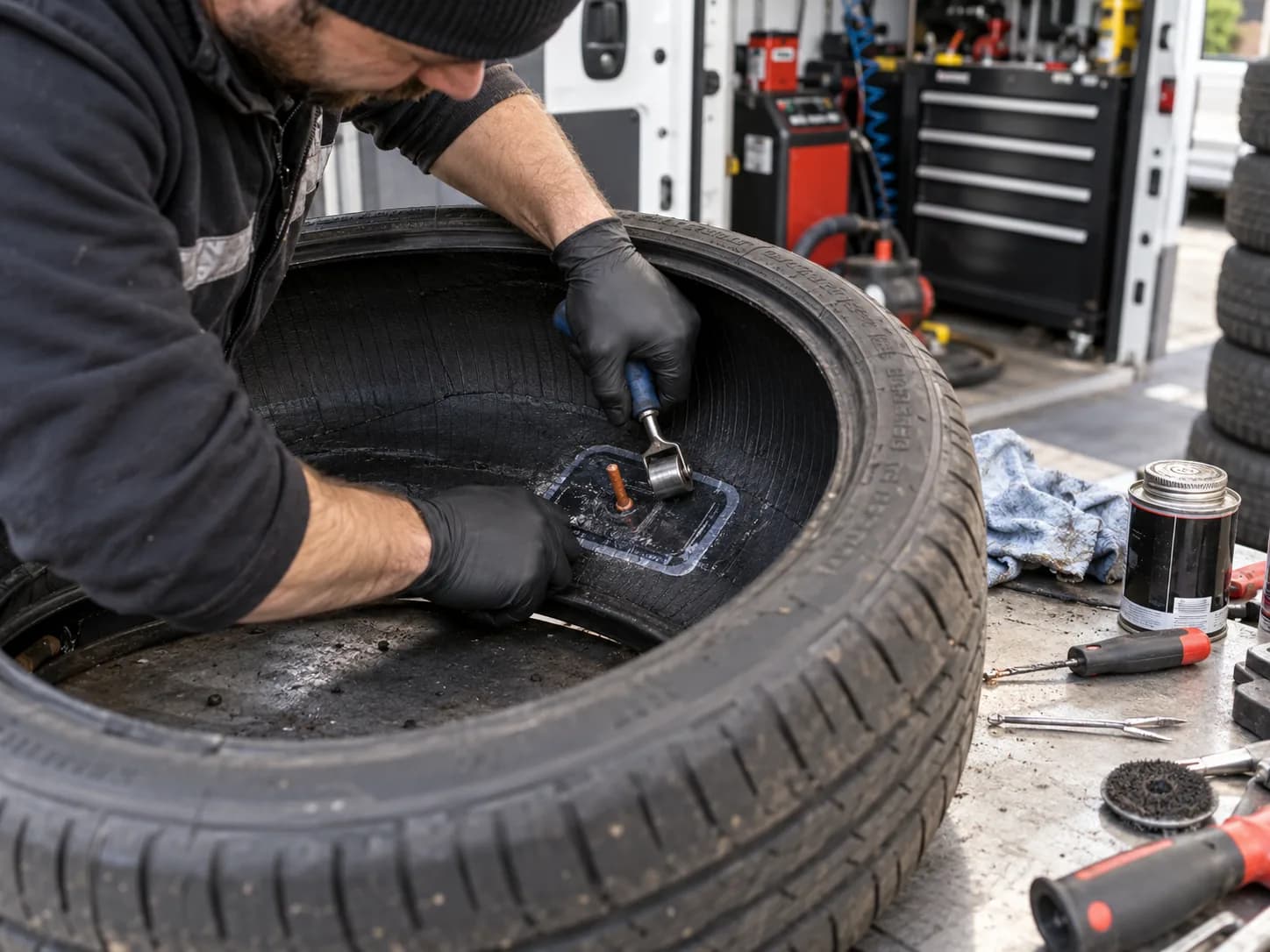
A proper repair follows the same steps as a garage repair, with the tyre removed from the wheel so the technician can check the inside.
Pirelli UK says damage needs careful assessment, because technicians cannot repair every puncture. A typical mobile tyre repair runs in five steps.
- 1
Assess the puncture. The technician checks where the hole sits and how large it is against the repair limits.
- 2
Remove the wheel and tyre. The tyre comes off the wheel so the inner surface is visible.
- 3
Inspect the inside. The technician looks for under-inflation marks, stress or debris that the outside hides.
- 4
Repair the hole. A combined plug and patch fills the hole and seals the inner liner.
- 5
Refit and check pressure. Pirelli advises confirming that pressure matches the manufacturer's figure after a repair.
A repair that skips step two cannot include step three. Blackcircles, a UK tyre retailer, says only a professional combined repair includes an internal check for damage the outside hides.
Members of a UK driving forum in August 2026 describe the same sequence. They cite BS AU 159 as the reason the tyre must leave the rim for inspection.
Plug, Patch or Combined: Which Repair Is Acceptable?
A combined plug and patch repair, fitted from inside the tyre, is the method to ask for.
| Method | Fitted from | Tyre off the wheel? | Verdict |
|---|---|---|---|
| String or plug only | Outside | No | Temporary fix only; Blackcircles says a plug alone does not comply with BS AU 159 |
| Patch | Inside | Yes | Seals the inner liner |
| Combined plug and patch | Inside | Yes | The recommended long-term option |
DIY kits belong in the temporary group. WhoCanFixMyCar calls them a short-term fix and advises avoiding string repairs, because nobody checks the inside.
Can a Technician Repair Every Puncture?
No. Technicians can repair only small punctures in the central tread, and several kinds of damage mean a new tyre.
| Situation | Repairable? |
|---|---|
| Puncture in the central tread, up to 6mm | Usually yes |
| Puncture in the shoulder or sidewall | No |
| Cords showing, a bulge, or a cut reaching the carcass | No |
| A previous faulty repair | No |
| Run-flat tyre | No; manufacturers advise against it |
| Tread below 1.6mm | Replace the tyre |
Pirelli UK and Just Tyres (February 2024) set these limits. They draw the repairable zone differently, though. Pirelli says 60 to 70% of the tread width, while Just Tyres says the central three-quarters.
The technician's repair chart settles it for your tyre. Check your tread before you call, because the legal minimum is 1.6mm across the central three-quarters and around the whole circumference, the Motor Ombudsman says (June 2026).
Run-flat tyres can travel up to 50 miles at up to 50mph after a puncture, Pirelli says. The reinforced sidewall can hide damage, so run-flat tyre repair is generally off the table.
The same limits apply to car tyre, SUV tyre and van tyre repairs.
What Is BS AU 159, and Why Does It Matter?
BS AU 159 is the British Standard for repairing tyres on vehicles used on public roads, and it defines what a safe repair looks like.
The British Standards Institution lists the current edition as BS AU 159G:2013, published on 30 November 2013 and still current. It covers inspection, performance criteria, repair materials and marking.
Its scope excludes temporary external plugs, liquid sealants, sealant gel tyres and T-type temporary spare tyres. Treat a plug-only fix or a can of sealant as a stopgap to reach a fitter.
Pirelli says the standard also sets the number of repairs, the size limit and the location limit. Ask the fitter whether the repair follows BS AU 159G, and ask to see the puncture and the finished repair, as Green Flag suggests.
What Should You Do While You Wait for the Technician?
Get yourself and your car to a safe place first, because the Highway Code puts safety ahead of the repair.
On any road, rule 274 says to move the vehicle off the road if you can. Use hazard warning lights if it still obstructs traffic, and do not stand between your vehicle and oncoming traffic.
Place a warning triangle at least 45 metres behind the vehicle, but never on a motorway. Wear fluorescent clothing by day and reflective clothing at night.
On a motorway, rule 275 says to leave at the next exit or service area if you can. Otherwise stop on the hard shoulder as far left as possible, with your wheels turned left.
Leave by the left-hand door and wait well away from the carriageway. The code says not to put yourself in danger by attempting even simple repairs.
Walk to an emergency telephone on your side, which connects directly to the police. Where there is no hard shoulder, rule 277 says to switch on your hazard lights and leave the vehicle only when you can get clear.
For a flat on an ordinary road, emergency mobile tyre fitting can bring a technician to your location.
What Should You Ask Before You Book Mobile Tyre Repair?
Ask five questions before work starts, and expect clear answers.
1. Can you show me the puncture and the repair?
Green Flag, citing Continental's Steve Howat, recommends asking this.
2. Will you take the tyre off the wheel?
A repair without removal cannot include an inside inspection.
3. Does the repair follow BS AU 159G?
Ask for a plain yes or no.
4. Will you check the valve and rim too?
A UK forum thread from August 2026 notes that a slow leak can come from a damaged rim or valve, not only the tyre.
5. Can you repair my tyre type, such as run-flat or foam-lined?
Forum members in August 2026 said foam-lined tyres need removal and inspection before repair.
The guide to silent tyres explains foam-lined models in more detail.
FAQs About Mobile Tyre Repair
Can a technician repair a puncture at home or at the roadside?
Often, yes. A small puncture in the central tread is repairable wherever the technician can safely remove and inspect the tyre. The Highway Code says never to attempt repairs on a motorway hard shoulder.
Is mobile tyre repair as good as a garage repair?
It can be, because the repair method matters more than the location. Start Rescue concludes that both options should produce a correctly fitted tyre. Check that the fitter removes the tyre and follows BS AU 159G.
Can you repair a run-flat tyre?
Generally no. Pirelli says manufacturers advise against it because the reinforced sidewall can hide damage, and Just Tyres does not repair run-flat tyres.
Is a plug or sealant safe?
Only as a temporary measure. BSI's scope for BS AU 159G excludes temporary external plugs and liquid sealants, so get the tyre inspected and properly repaired or replaced soon.
What if my tyre is beyond repair?
It needs replacing. Tyre replacement at home brings a new tyre to your door, so you do not need to drive on the damaged one.
Need a Mobile Tyre Repair Near You in Bristol?
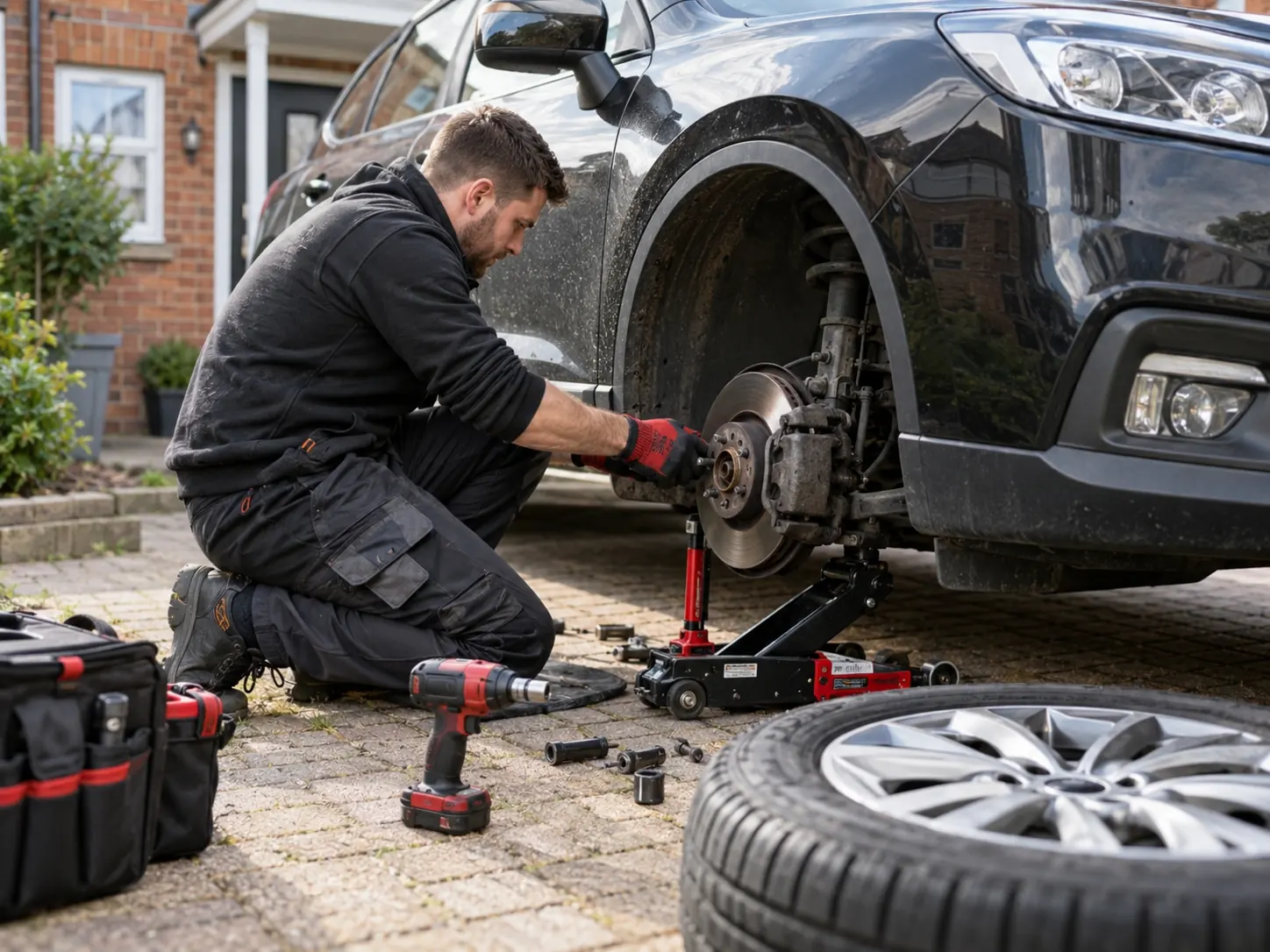
Rapid Mobile Tyres serves Bristol and the surrounding area 24 hours a day, at your home, workplace or roadside. Fitters usually arrive in 45 to 60 minutes, depending on traffic, technician, tyre availability and location. Check the areas we cover first.