
What to Do When You Get a Flat Tyre in Bristol: Step-by-Step Guide
Stay safe, know what to check, and get help fast with this step-by-step guide.
Home / Blog / What to Do When You Get a Flat Tyre in Bristol
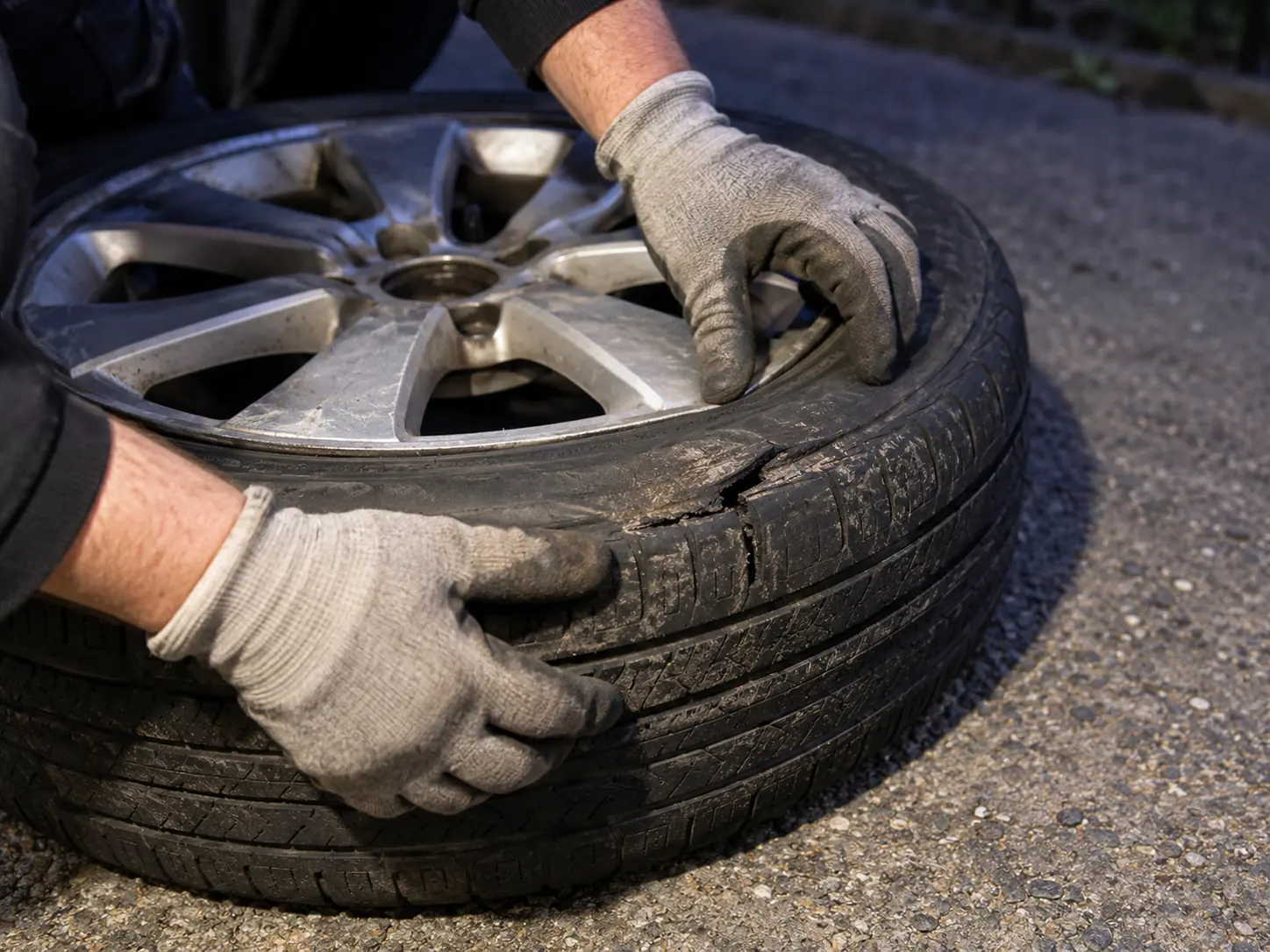
A flat tyre can happen to anyone, anywhere, whether you are on the school run, commuting across the city or driving home late at night. It is stressful, but if you stay calm and follow the right steps, you can stay safe and get moving again quickly.
This guide walks you through exactly what to do when you get a flat tyre in Bristol, from the moment you notice it to getting a proper replacement fitted.
How to Tell You Have a Flat or Failing Tyre
Sometimes a flat tyre is obvious. Other times the signs build up. Watch out for:
- The car pulling to one side
- A thumping or flapping sound from a wheel
- Vibration through the steering wheel or seat
- The steering feeling heavy or unresponsive
- A tyre pressure warning light on your dashboard
- A tyre that looks visibly low or flat
A sudden blowout can be frightening, but the steps below still apply.
Stay Calm and Hold the Steering Wheel Firmly
If a tyre fails while you are driving:
- Do not slam on the brakes. Sudden braking can make the car harder to control.
- Grip the steering wheel firmly with both hands.
- Ease off the accelerator and let the car slow down gradually.
- Steer gently to keep the vehicle straight.
- Once you have slowed down, brake lightly and look for a safe place to stop.
Turn On Your Hazard Lights and Find a Safe Place to Stop
Switch on your hazard warning lights as soon as you realise there is a problem. Then look for the safest place to pull over, for example:
- A side street or quiet road
- A car park or petrol station
- A lay-by
- A wide, flat verge away from the flow of traffic
Try not to stop on a bend, a hill crest or anywhere other drivers cannot see you easily. If you can safely reach a flat, quiet spot, even driving slowly for a very short distance is usually better than stopping in a dangerous location, but avoid driving far on a flat tyre as it can damage the wheel.
Make the Scene Safe
Once you have stopped:
- Apply the handbrake and turn off the engine.
- Turn the wheels away from the road if you are on a slope or kerb, if it is safe to do so.
- Get everyone out safely if you are near traffic, and have passengers stand well away from the road, ideally behind a barrier or on the verge.
- Take care of children and pets, keeping them away from moving vehicles.
- If it is dark or visibility is poor, make sure your lights are on and wear something bright if you have it.
Your safety always comes before the car.
If You Are on a Motorway or Main Road
Bristol drivers often use the M5, M32 and busy A-roads, and a flat tyre on a fast road needs extra care.
- Do not try to change the wheel on a hard shoulder or a fast road. It is simply too dangerous.
- Leave the vehicle by the left-hand doors and move to a safe place behind the barrier, away from the carriageway.
- Keep animals in the vehicle if safe, or on a lead well away from the road.
- Do not stand behind or in front of your vehicle.
- Call for help from a safe spot. Where possible use an emergency phone or your mobile.
- If you cannot get out safely, or you feel in danger, call 999.
On some roads, there are emergency areas rather than a hard shoulder. Follow the signs and the official guidance, and be aware that rules and road layouts can differ.
Check the Damage
If you are in a safe place, take a look at the tyre without putting yourself at risk:
- Is the tyre completely flat, or just low?
- Can you see a nail, screw or sharp object?
- Is there a cut or bulge on the sidewall?
- Is the wheel itself bent or cracked?
Sidewall damage cannot normally be repaired, and a damaged tyre may need to be replaced rather than patched. Do not try to drive on a seriously damaged tyre.
Decide How to Get Moving Again
You usually have four options:
Option 1: Call a Mobile Tyre Fitter (Often the Safest and Easiest)
A mobile tyre fitter comes to you and replaces or repairs the tyre at your location. You do not need to change the wheel yourself, and you do not need to find a garage. This is especially helpful if:
- You are in a busy or unsafe location
- You are travelling with children or passengers
- It is dark, raining or very cold
- You do not have a spare, or the spare is flat or unsuitable
- You cannot loosen the wheel nuts or do not have the locking wheel nut key
- You do not feel confident changing a wheel
Rapid Mobile Tyres provides emergency mobile tyre fitting 24/7 across Bristol and surrounding areas. Our usual arrival time is around 45–60 minutes, depending on traffic, availability and your exact location.
Option 2: Use Your Spare Wheel
If you are in a safe, flat and quiet location and you know how to change a wheel, you can fit your spare. Remember that a temporary space-saver spare has speed and distance limits. Read our guide on how long you can drive on a spare tyre before you set off.
Option 3: Use a Tyre Repair Kit
Many modern cars have a sealant and inflator kit instead of a spare. These can be a very short-term fix for small punctures in the tread, but they are not suitable for all damage, and the tyre should be checked soon after.
Option 4: Call Your Breakdown Provider
If you have breakdown cover, you can call your provider. Be aware that waiting times vary, and they may only be able to fit your spare rather than replace the tyre.
What Information to Have Ready When You Call
To get quick help from a mobile tyre fitter, have these details ready:
- Your exact location (street name, nearby landmark, postcode, or a pinned location from your phone)
- Your vehicle registration number or make, model and year
- The tyre size from the sidewall, for example 205/55 R16
- Which tyre is flat and a rough idea of the damage
- Whether you have a locking wheel nut key
- Whether you are in a safe place
This helps your fitter bring the right tyre and arrive prepared.
While You Wait
- Stay in a safe position, away from traffic.
- Keep your phone charged and nearby.
- Keep your hazard lights on if it is safe to do so.
- Do not attempt repairs in a dangerous location.
- Stay in contact with your fitter if your situation changes.
After the Tyre Is Fixed
Once you are back on the road, there are a few things to do:
- Check the other tyres. If one has failed, the others may be worn or damaged too.
- Check tyre pressure across all four tyres, and the spare if you have one.
- Replace the damaged tyre promptly if you used a temporary fix.
- Consider replacing tyres in pairs on the same axle for even handling.
- Think about why it happened. Potholes, worn tread and under-inflation are common causes.
If you would rather avoid a rush next time, you can arrange a tyre replacement at home before a worn tyre fails.
Common Mistakes to Avoid
- Driving a long way on a flat tyre. It can destroy the tyre and damage the wheel.
- Changing a wheel on a hard shoulder or busy road.
- Ignoring a slow puncture. It often gets worse quickly.
- Using a temporary spare as a permanent fix.
- Forgetting to check the spare's pressure.
- Not checking the locking wheel nut key before you need it.
Where We Help Across Bristol and the Surrounding Areas
Rapid Mobile Tyres is based in Shirehampton, Bristol, and provides mobile tyre fitting across Bristol and many surrounding areas, including places such as Avonmouth, Brislington, Bradley Stoke, Bishopsworth, Bath and Weston-super-Mare. Check our areas we cover to see whether we can reach you.
Frequently Asked Questions
What should I do first if I get a flat tyre while driving?
Stay calm, hold the steering wheel firmly, ease off the accelerator, switch on your hazard lights and slow down gradually. Look for a safe place to stop. Avoid sudden braking or sharp steering.
Can I drive on a flat tyre to get to a garage?
It is not recommended. Driving on a flat tyre can damage the wheel, cause loss of control and make a repair impossible. It is safer to stop and get help.
Is it safe to change a flat tyre on the motorway?
No. Changing a wheel on a hard shoulder or fast road is dangerous. Get out of the vehicle safely, stay behind the barrier and call for help.
How long does it take for a mobile tyre fitter to arrive in Bristol?
Our usual arrival time is around 45–60 minutes, depending on traffic, availability and your exact location.
Can a flat tyre be repaired?
Sometimes. Small punctures in the main tread area can often be repaired, but sidewall damage or large cuts usually mean the tyre needs replacing. A fitter can check this for you.
What if I do not have a spare tyre?
Many modern cars no longer carry a spare. A mobile tyre fitter can bring and fit a replacement tyre wherever you are, so you do not need a spare.
Do you offer 24/7 emergency tyre fitting in Bristol?
Yes. We provide 24/7 emergency mobile tyre fitting across Bristol and the surrounding areas, subject to technician and tyre availability.
Final Thoughts
A flat tyre does not have to ruin your day. Stay calm, get to a safe place, protect yourself and your passengers, and call for help if you are not comfortable or the situation is unsafe. Remember that your safety is always more important than the car or your schedule.
If you get a flat tyre in Bristol or nearby, Rapid Mobile Tyres is here 24/7 to get you back on the road, whether it's your car, van or SUV.
Got a Flat Tyre Right Now?
Call now or request a callback for fast emergency tyre fitting — 24/7 across Bristol and the surrounding areas.