
What to Do If Your Car Won’t Start: A Step-by-Step Jump Start Guide for Drivers in the UK
There’s no sound when you turn the key. It could be even worse: the panel lights fade and there is a clicking sound. UK drivers often have trouble with cars that won’t start, especially in the morning when it’s cold or after leaving the car parked for a while. Often, it’s because the battery is dead, and all you need is a jump start to get going again.
There are times when it’s better to call for help on the side of the road than to try to jump-start your car.
Why Your Car Won't Start Most of the Time
Before you try to jump-start the car, it’s helpful to know what’s wrong. These are the most common reasons:
- Low or weak energy (often because it’s cold outside or because the trip is short)
- Batteries that are almost dead (usually after 3–5 years) Lights or electronics left on all night
- Battery connections that are loose or rusted
A flat battery is likely if the car won’t start or if you hear clicking sounds over and over.
What You Need to Get a Car Going Again
Before you start, make sure you have the right tools:
- Jump leads that are in good shape
- A source car with a battery that works (or a portable jump starter
- Both cars were parked close together but not touching.
- Engines turned off and handbrakes put on
If you have a newer car, you should always check the manual to see if there are any manufacturer-specific instructions.
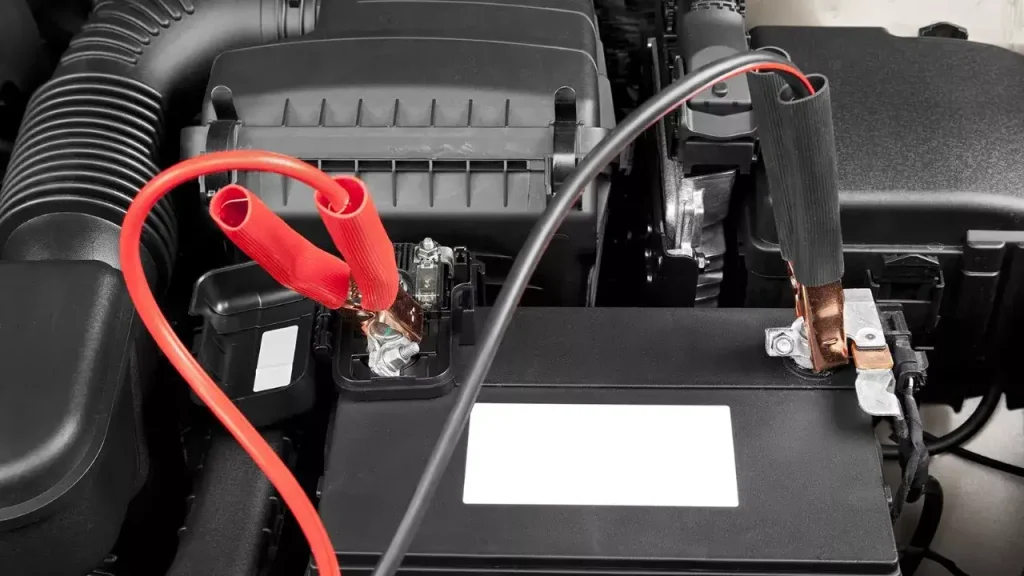
Step 1:First, find the battery terminals.
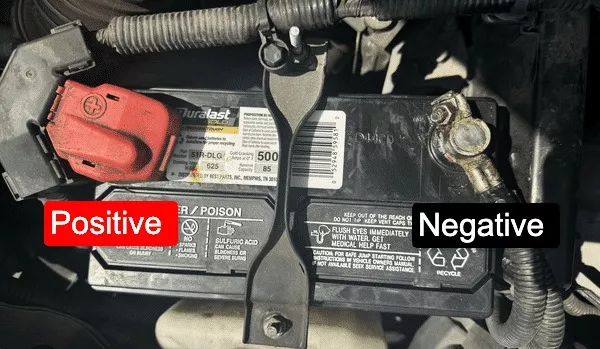
Find the positive (+) and negative (–) connections by opening both hoods. Most of the time, they have red and black caps to track them.
Step 2: Hook up the jump leads.
Pay close attention to this order:
- Plug the red wire into the flat battery’s positive contact.
- Connect the other end of the red lead to the positive terminal on the donated battery.
- Connect the black line to the negative terminal of the donor battery.
- Connect the last black clamp to a metal part of the broken-down car that isn’t painted. This isn’t the battery itself.
Sparks are less likely to happen near the battery this way.
Step 3: Turn on the donor car
Run the source car for two to three minutes to charge it up.
Step 4: Get your car going.
Start the engine. Wait one more minute and try again if it doesn’t start right away. Don’t try again and again.
Step 5: Take the leads apart.
Take the leads off in the wrong order after the engine is going.
What to Do Next Once the Car Is Running
Just because the jump start works doesn’t mean the problem is fixed for good. To keep from getting lost again:
- It needs to be driven for 20 to 30 minutes to fully charge.
- Do not turn off the car right away.
- Do a health check on the battery if the issue comes up again.
If the car stops again soon after, the battery might need to be changed or there might be a problem with the alternator.
When You Shouldn't Try a Jump Start
Jump starting isn’t always safe or useful. You shouldn’t try it if:
- The battery is broken, frozen, or leaking.
- You don’t know where the link points are.
- The car displays signs telling you not to jump-start it.
- You’re on a busy road or somewhere dangerous.
In these situations, it’s safer to get professional roadside help. A lot of drivers in the UK depend on services like Rapid Tyres, which give jump starts and other roadside assistance without having to tow the car.
Other Things to Think About If Jump Starting Doesn't Work
It might not be the battery if a jump start doesn’t work. Some other options are:
- Failure of the starter motor
- The starting switch is broken
- Problems with fuel
- problems in the electrical system
At the side of the road, a trained expert can quickly figure out what’s wrong.
Last Thoughts
Stress can build up when your car won’t start, but a simple jump start can often fix the issue. There are safe steps that UK drivers can take to get back on the road quickly and with confidence.
If you know when to try a jump start and when to call a professional, you can save time, lower your risk, and keep your car from getting worse.