
Getting a flat tyre is never convenient, but knowing how to handle your spare safely can make all the difference. Whether you’re stuck on the motorway or dealing with a puncture near home, understanding the limits of your spare tyre is crucial for your safety and legal compliance on UK roads.
Understanding Different Types of Spare Tyres
Not all spare tyres are created equal. Most UK vehicles come equipped with one of three types:
Full-size spare tyres
Match your regular tyres completely and can be driven indefinitely, though you should still replace your damaged tyre as soon as possible.
Space-saver spare tyres
They are smaller, narrower, and designed only for temporary use. These distinctive tyres are easily identified by their compact size and often bright colour.
Run-flat tyres
They aren't technically spares but allow you to continue driving for a limited distance after a puncture.
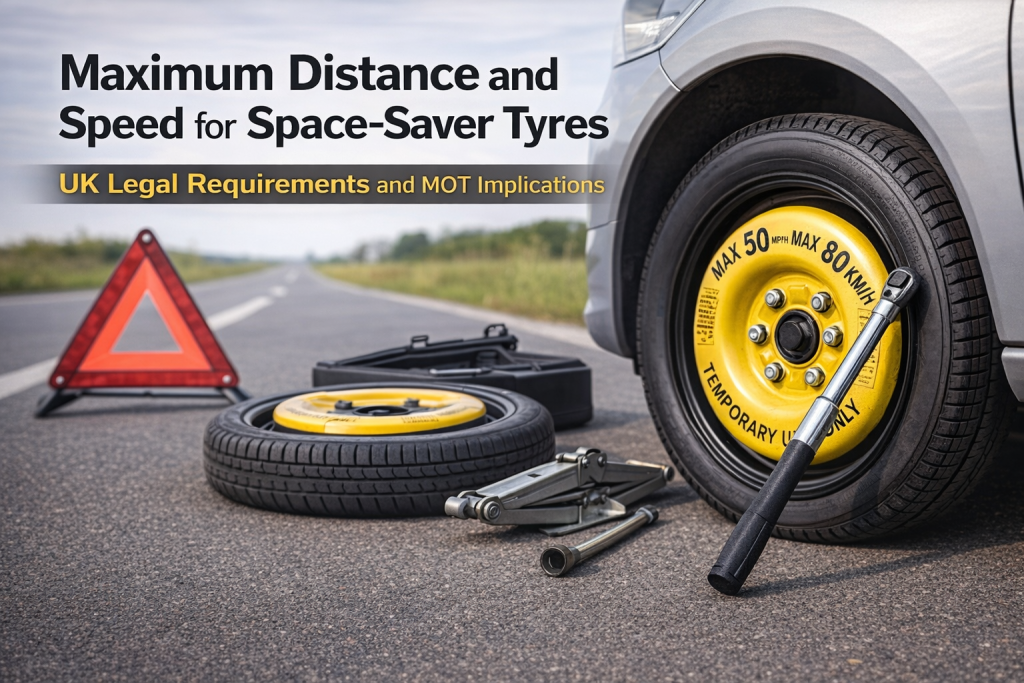
Maximum Distance and Speed for Space-Saver Tyres
Space-saver spare tyres have strict limitations that every driver must follow. In the UK, you should drive no more than50 miles on a space-saver tyre, and your maximum speed must not exceed50 mph. These aren’t just recommendations—they’re essential safety guidelines printed on the tyre itself.
The restricted distance exists because space-savers have shallower tread depth, different rubber compounds, and reduced structural integrity compared to standard tyres. Exceeding these limits risks tyre failure, reduced vehicle control, and potential accidents.
UK Legal Requirements and MOT Implications
From a legal standpoint, driving on a properly fitted spare tyre is permitted in the UK, provided it meets minimum safety standards. Your spare must have:
- A minimum tread depth of 1.6mm across the central three-quarters
- No visible damage, cuts, or bulges
- Correct inflation pressure (usually higher than regular tyres)
However, space-saver tyres will cause your vehicle to fail an MOT test if fitted during inspection. Always replace your spare with a proper tyre before your MOT appointment.
How Your Vehicle Handles Differently on a Spare
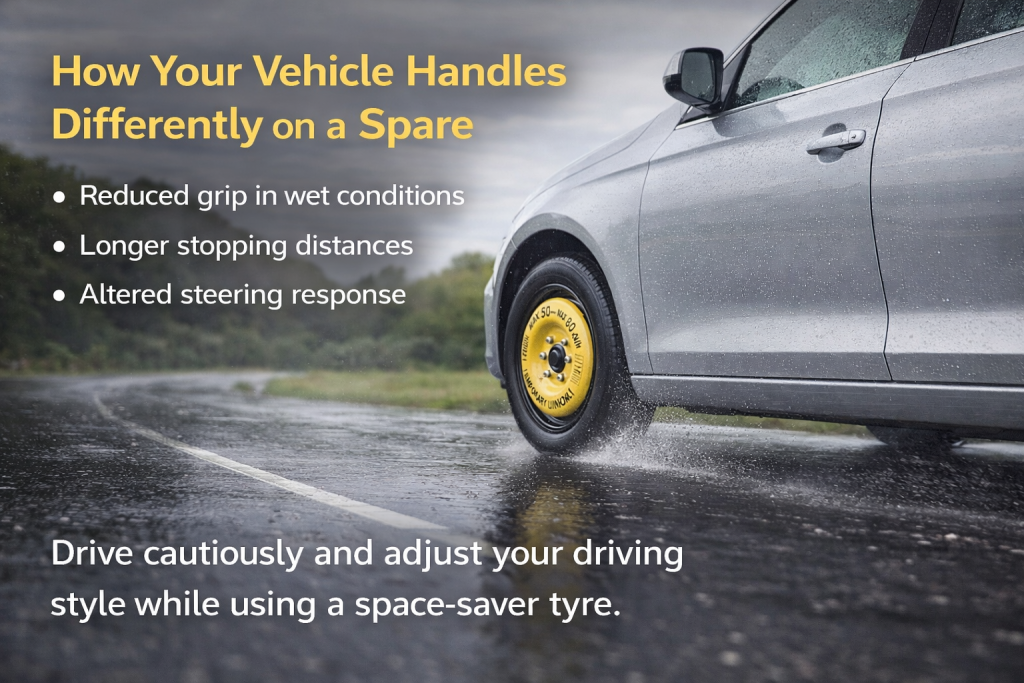
Driving on a space-saver spare significantly affects your car’s performance. The smaller diameter and narrower width alter your vehicle’s handling characteristics, braking distances, and stability.
You may notice:
- Reduced grip in wet conditions
- Longer stopping distances
- Altered steering response
- Potential triggering of ABS and traction control systems
These changes make it vital to drive cautiously and adjust your driving style accordingly. Avoid sudden manoeuvres, hard braking, and aggressive cornering whilst using a spare tyre.
What to Do After Fitting a Spare Tyre
Once you’ve fitted your spare tyre, your priority should be arranging a permanent replacement. Contact a tyre fitting service as soon as possible—many UK providers now offer mobile tyre fitting, which means a technician can come to your location and replace your tyre without you needing to drive further on your spare.
If you find yourself stranded with a flat tyre and no spare, or if you’re unable to fit it yourself, roadside assistance services can help. Some mobile tyre providers, such as Rapid Tyres, offer emergency callout services alongside other roadside support like jump starts and fuel delivery for complete breakdown coverage.
Space-Saver Maintenance Tips
Your spare tyre requires regular attention even when not in use:
Check the pressure every few months, as space-savers require higher inflation (typically 60 psi compared to 30-35 psi for regular tyres). Inspect for signs of perishing, cracking, or damage during routine vehicle checks. Replace spare tyres that are over six years old, regardless of use, as rubber degrades over time.
When You Shouldn't Use a Spare Tyre
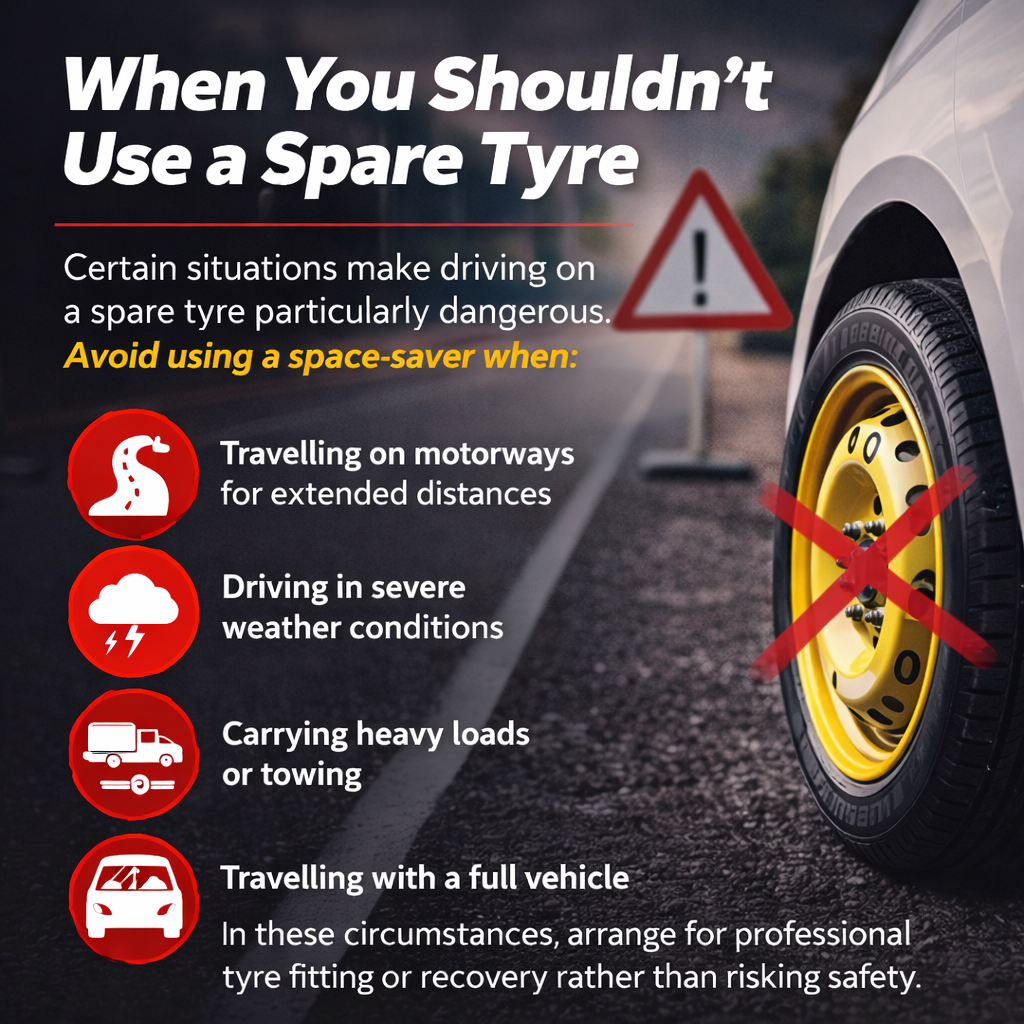
Certain situations make driving on a spare tyre particularly dangerous. Avoid using a space-saver when:
- Travelling on motorways for extended distances
- Driving in severe weather conditions
- Carrying heavy loads or towing
- Travelling with a full vehicle
In these circumstances, arrange for professional tyre fitting or recovery rather than risking safety.
The Bottom Line on Spare Tyre Safety
A spare tyre is a temporary solution designed to get you home or to a tyre fitting centre safely—nothing more. The golden rule remains: 50 miles maximum distance at 50 mph maximum speed for space-savers.
Treat your spare tyre as an emergency measure rather than a long-term fix. The sooner you replace it with a proper tyre, the safer you’ll be on UK roads. Regular maintenance of your spare ensures it’s ready when you need it most, giving you peace of mind during unexpected breakdowns.